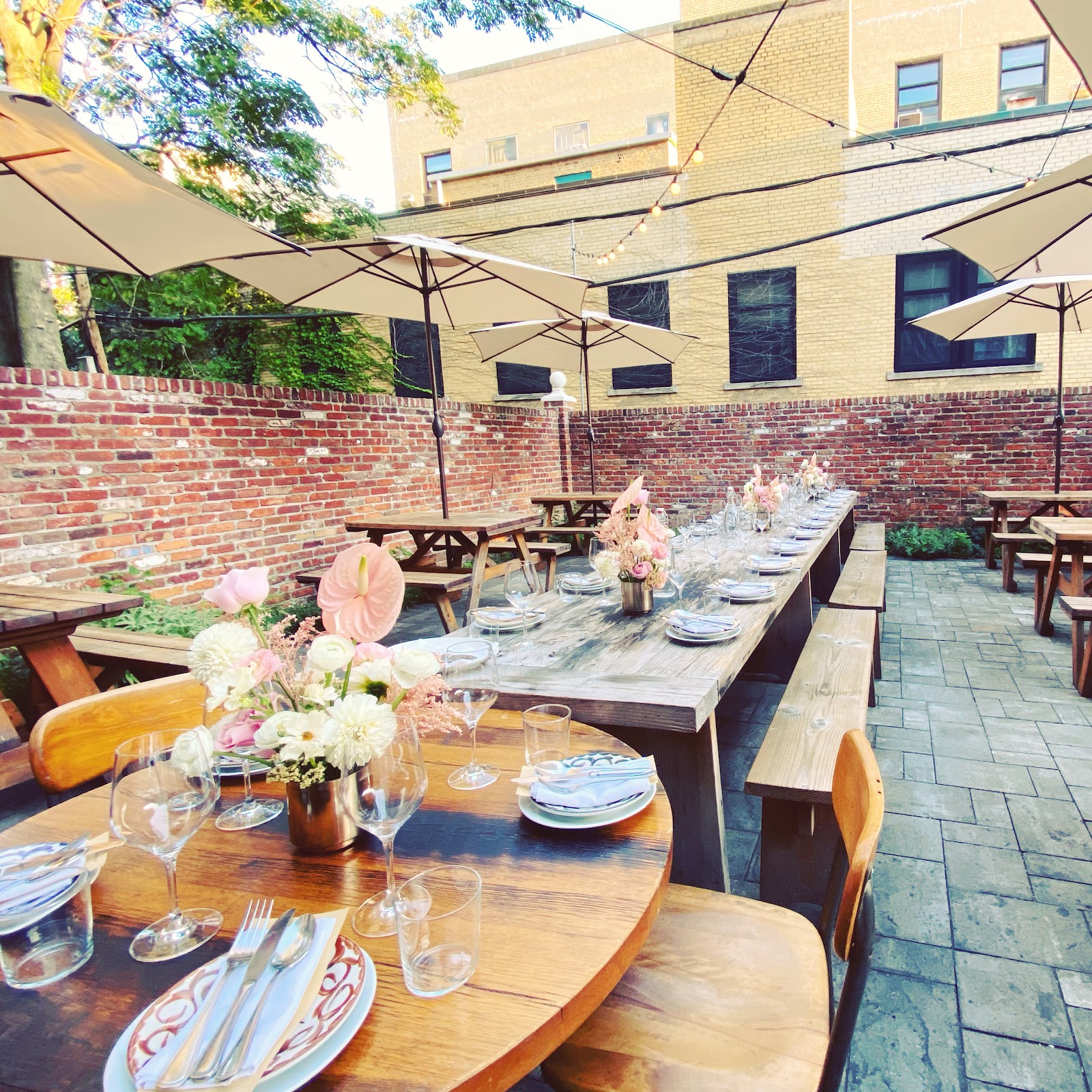
Walk past Ammazzacaffè on the street and you'll miss it entirely. The exterior offers no promises, no Instagram bait, no hint of what waits inside. But step through the door and the reveal is immediate: high ceilings, exposed brick, candlelit tables, and a sprawling backyard wrapped in string lights that feels less like a restaurant and more like the kind of place you stumble into at the end of a long week and forget to leave.
Since opening in 2017, Ammazzacaffè has earned its Michelin Bib Gourmand designation not through spectacle but through relentless consistency and an almost stubborn refusal to play it safe. The menu abandons the tired Italian-American hits—there's no cacio e pepe, no carbonara—in favor of house-made pastas that reveal a real hand: agnolotti studded with almond pesto, reginette finished with pancetta and caciocavallo, garganelli dressed in a cream-kissed ragù Bolognese. The small plates and grilled skewers (pancetta spiedini with spicy aïoli and agro dolce) exist to punctuate rather than overwhelm. A Caesar salad with bottarga and bagna cauda reminds you that restraint, when applied correctly, tastes expensive.
But the amaro list is where Ammazzacaffè stops being just another solid neighborhood spot and becomes something worth planning around. Over 60 varieties anchor the entire experience around the Italian tradition of the digestivo—that unhurried glass meant to settle the stomach and slow the night down. The wine list runs all Italian, naturally, and the bartenders actually know what they're doing. This is not a place that views the end of a meal as a transaction to close out; it's a place that understands the end of a meal is often the best part.
What makes Ammazzacaffè matter right now is precisely what makes it easy to overlook: it doesn't perform. It doesn't need to. The food is honest. The space is warm without trying. The backyard, strung with lights and bounded by brick, is the kind of Sunday-evening setting that makes you want to text your friends and then forget your phone exists. This is comfort-driven dining in the truest sense—the kind where you arrive stressed and leave remembering why you liked being alive in the first place.
Go on a weeknight if you can. Walk in early, or arrive with the understanding that a 45-minute wait is part of the deal, and that waiting at the bar with an amaro makes it feel less like waiting and more like the meal has already started.