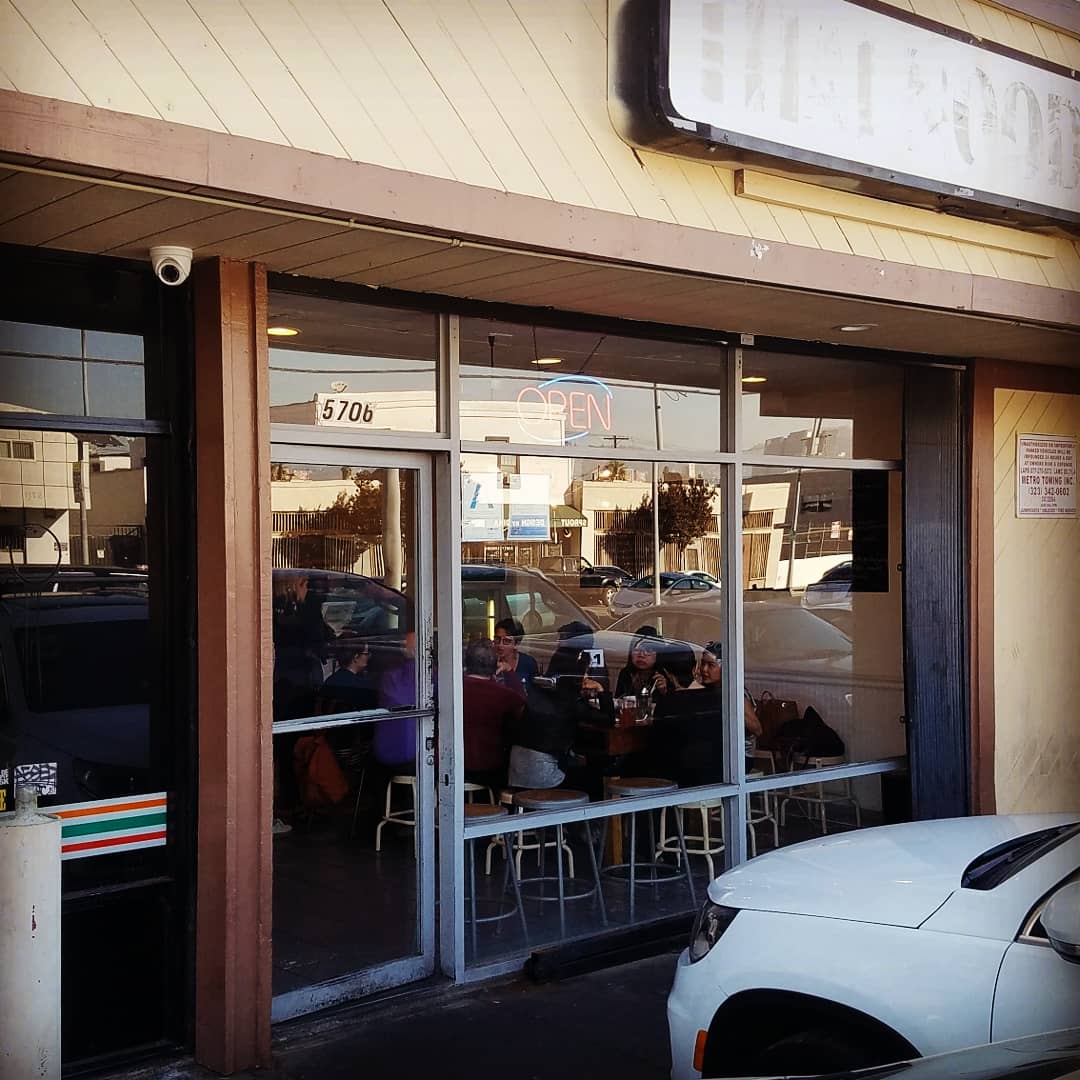
When Baroo closed its original location in 2018, Los Angeles lost one of its most interesting restaurants. The city's Korean dining scene—dominated by banchan-laden tables and sizzling tabletop grills—had little use for a chef quietly experimenting with Buddhist philosophy and fermentation science. But restaurants don't close forever because they're ahead of their time; they close because the moment hasn't arrived yet. In September 2023, chef Kwang Uh and co-owner Mina Park reopened Baroo in the Arts District, and this time, the city was ready to listen.
Uh's food operates on a different frequency than what most Angelenos associate with Korean restaurants. The tasting menu—six courses for $110—strips away the spectacle and the excess. There are no tableside theatrics, no Korean barbecue smoke, no assault of competing flavors. Instead, Uh builds momentum methodically. A ssam of fried sole arrives in butter lettuce, delicate and buttery. Short rib or pork collar comes alongside rice seasoned with dried shepherd's purse, an herb that carries mineral notes most diners have never encountered. By the third course, as critic Bill Addison noted, "the momentum behind Kwang Uh's modern Korean cooking, light and assured, becomes fully realized." It's a meal that rewards attention.
What distinguishes Baroo isn't novelty for its own sake—it's the intelligence behind every choice. Fermentation isn't a gimmick here; it's Uh's primary language. His kimchi pickles aren't aggressive or sour but nuanced, almost meditative. A chorizo XO sauce arrives where you'd expect gochujang, yet somehow it deepens rather than contradicts the meal's logic. Seaweed-battered sole with gooseberry and gim gochunaengi demonstrates that innovation in Korean cooking doesn't require abandoning Korean ingredients; it requires understanding them more deeply than anyone else in the room.
The LA Times naming Baroo 2024 Restaurant of the Year wasn't a surprise to anyone who's eaten there. Bill Addison's assessment rings true: "In Los Angeles, where traditional expressions of the cuisine define the Korean restaurant ethos, Baroo stands apart as the city's most persuasive foray into innovation." But persuasion requires restraint, which is exactly what Uh practices. This is cooking that trusts the diner to meet it halfway, that believes vegetables and herbs and technique can compete with spectacle. In a city obsessed with novelty, Baroo's quiet radicalism feels genuinely rare.