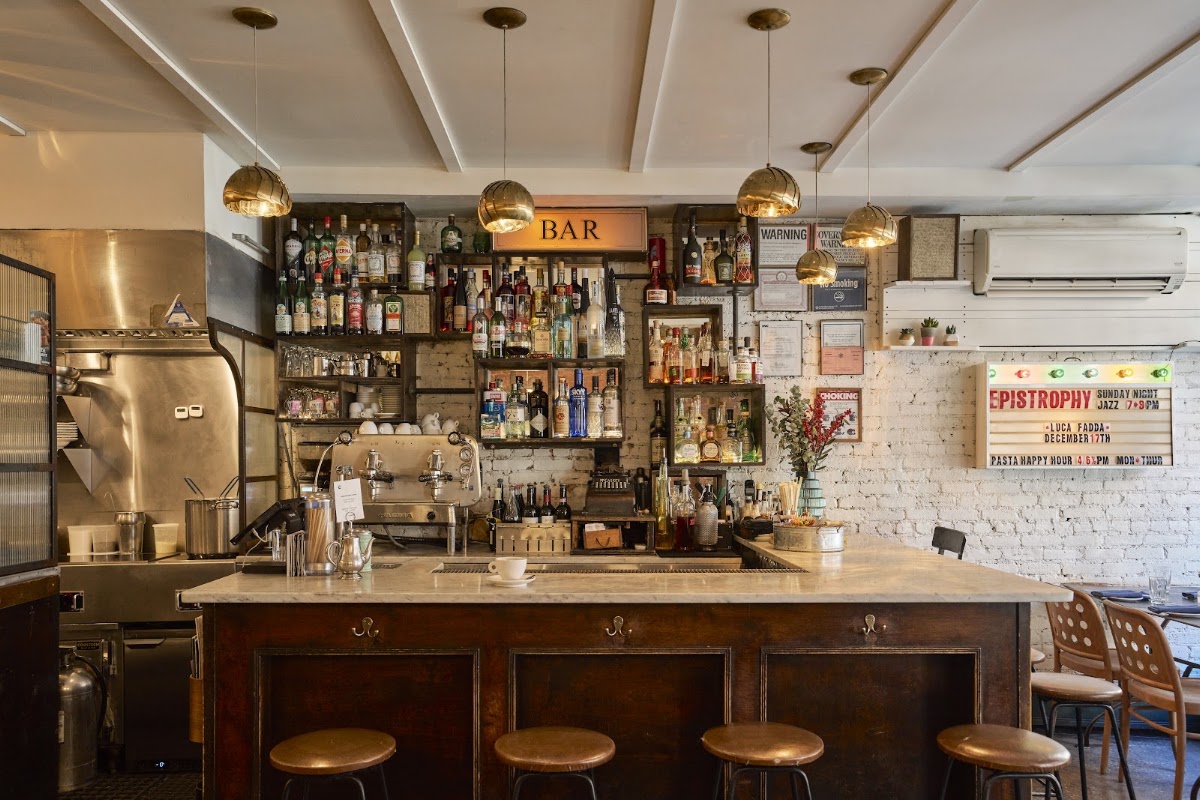
There's something quietly defiant about a restaurant that has been open for nineteen years in one of Manhattan's most scrutinized neighborhoods and still manages to surprise a seasoned food critic with its existence. Epistrophy, named after the Thelonious Monk and Kenny Clarke bebop composition, opened in 2005 under the stewardship of Sardinian husband-and-wife team Giorgia Zedda and Luca Fadda, alongside partner Nico Paganelli. In an era of relentless self-promotion and algorithmic visibility, Epistrophy has done something almost radical: it has simply stayed put, cooked honestly, and let word of mouth carry the weight. The result is a restaurant that feels less like a destination and more like the kind of neighborhood spot you stumble into and immediately wish you'd known about for years.
The food is rooted in Sardinian tradition, executed with the kind of restraint that suggests the owners know exactly what they're doing and aren't interested in proving it to anyone. The brasato al Cannonau—grass-fed beef short ribs braised in Cannonau wine and served over stone-ground polenta—arrives as a masterclass in patience: meat that yields without falling apart, wine reduced to its essential richness, polenta that tastes of corn and butter and time. The spaghetti cacio e pepe is exactly what it should be. The polpettine di vitello, grass-fed veal and beef meatballs suspended in white wine sauce with lemon zest, are lighter and more elegant than their name might suggest. Even the burrata—simple burrata with farm tomatoes—is the kind of thing regulars will defend in conversation. This is food that doesn't need you to understand it; it simply asks to be eaten.
The space itself plays no tricks. Cushioned benches, distressed brick, bookshelves lining the walls, a communal table where strangers become temporary neighbors—it reads as a Roman living room, not a carefully constructed design statement. Live jazz every Sunday night arrives as a natural extension of the restaurant's DNA, not a marketing angle. The wine list skews toward natural and organic producers, and a glass poured here comes without the pretension that has come to define wine service in Manhattan. This is the kind of place where you can come alone for brunch on a Saturday morning and not feel like you're missing something better, or where a catch-up dinner with an old friend feels less like a reservation and more like an invitation.
The real question isn't why Epistrophy has remained obscure—it's why obscurity has become so rare. In a city where every opening arrives with a publicist and an Instagram strategy, this restaurant has simply existed, cooked, and relied on the fidelity of people who found it and kept coming back. Forbes critic John Mariani once admitted he wondered how he could have missed hearing about such a place after it had been open for over a decade. That admission says everything about how Epistrophy operates in a landscape obsessed with discovery and novelty. It doesn't want to be discovered. It wants to be visited.
Go on a weeknight, arrive early, and plan to linger. Epistrophy rewards unhurried attention.