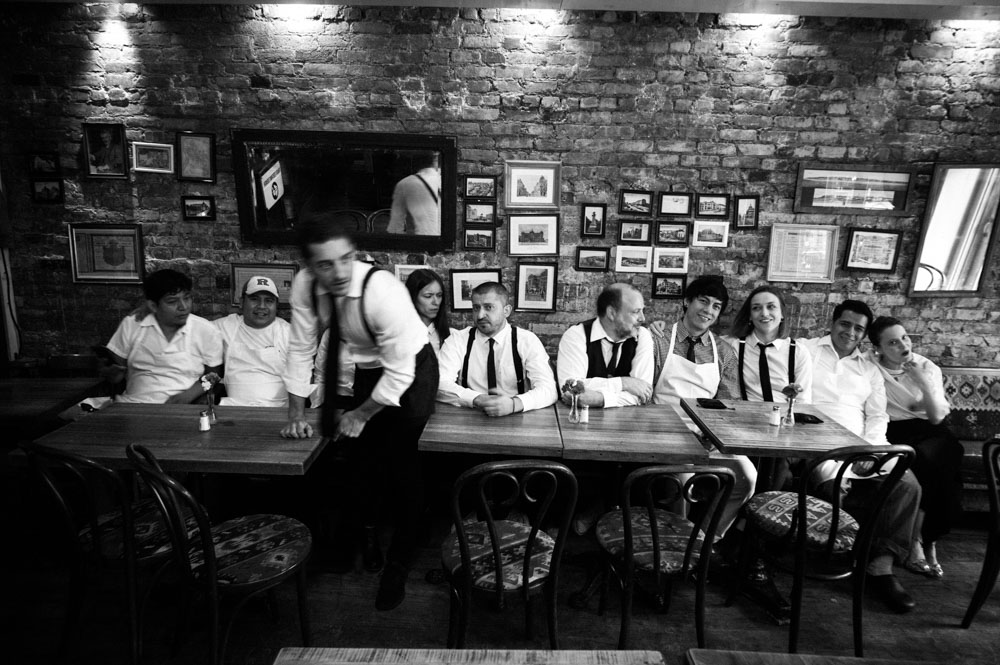
Walk down Avenue C in Alphabet City and you'll pass a modest storefront that most New Yorkers walk right by. Inside Kafana, the walls are papered with Yugoslav memorabilia and vintage black-and-white postcards—the kind of decor that feels less like a design choice and more like the accumulated personal history of a place that's been loved by the same community for sixteen years. Since around 2008, this has been New York City's only Serbian restaurant, a distinction it has held with quiet, unassuming dignity while the rest of the food world chased trends elsewhere.
The restaurant's obscurity is not accidental. Kafana exists for its regulars—the Balkan expats who find in its grilled meats and wine list a genuine taste of home, not a sanitized version packaged for critical approval. Yet this insularity is precisely what makes it invaluable. When Gabrielle Hamilton of Prune walked through the door, she described it perfectly: "a popular, bustling, low-key supper club in a bohemian neighborhood of Dubrovnik." That comparison still hangs on the menu, and it's accurate. The feeling here is of hospitality over performance, of hosts feeding people they care about rather than restaurants performing hospitality.
The food is straightforward and unapologetic. The ćevapi—skinless grilled sausages of beef, veal, and pork—arrive crisp and smoky with a juicy interior that needs no apologies for the missing casing. Raw onions and ajvar sit alongside, cutting through the richness. The Karadjordjeva, a breaded pork roll stuffed with kajmak cheese, shows similar restraint: the meat is so fresh and the grill work so precise that the dish doesn't need embellishment. A Sopska salad of chopped tomato, onion, and feta is the kind of thing you'll order again and again because it simply works. The prices are very reasonable—nowhere near what you'd pay for lesser food in trendier neighborhoods.
But the real revelation is the wine list. Two pages of Serbian, Croatian, Slovenian, and Albanian bottles represent one of the most distinctive Balkan wine selections in the entire city. This is not a trophy collection. These are the wines people from the region actually drink, selected by people who understand them. It's the kind of list that reminds you why wine regions exist in the first place—not for critics, but for the people who live there.
Kafana has never sought mainstream attention, and the mainstream food press has largely ignored it in return. But that omission is our loss. For anyone tired of restaurants that feel designed for Instagram or built to satisfy critical consensus, this quiet corner of Alphabet City offers something increasingly rare: a place that exists to serve its community first and doesn't much care what the rest of the city thinks. That's worth uncovering.