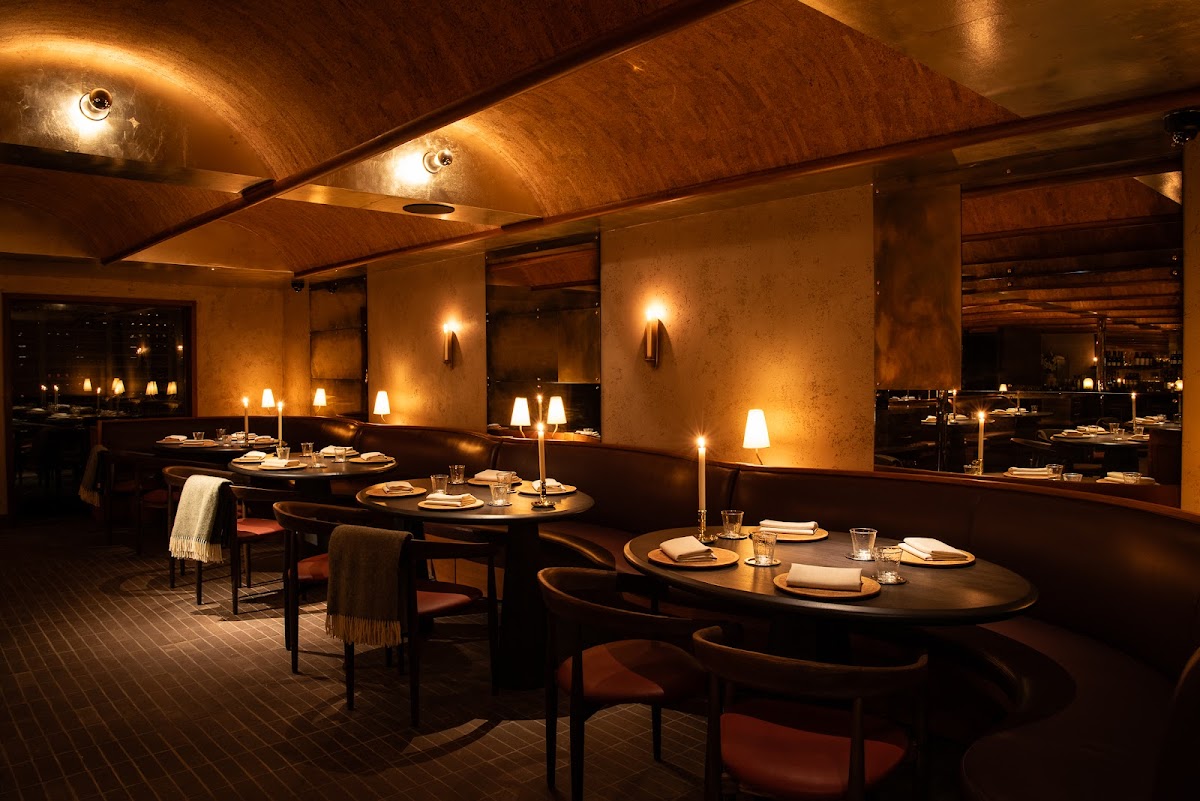
Marcus Jernmark spent years in three-Michelin-starred kitchens—Per Se, Frantzén, and others—learning the grammar of fine dining's most elevated dialects. Then he rejected its most suffocating rule. "Fine dining has spent too long trying to impress people instead of taking care of them," he says, and Lielle, which opened this March in Beverlywood's former Bicyclette space, is his counterargument: a 42-seat subterranean room where a chef of genuine accomplishment cooks four courses for $150 without the theater of formality.
This is not a comedown. Jernmark has coined his approach "California Bistronomy," and it's more demanding than it sounds. The menu changes with seasons, built on California's produce and proteins—abalone, squab, stone fruits, heirloom grains—but shaped by Nordic preservation techniques. Fermentation, curing, smoking, and aging are not nostalgic gestures here. They're infrastructure. Jernmark calls it "survival cooking," the kind that kept people fed through winters when fresh ingredients vanished. Applied to California's Mediterranean climate and abundance, the technique becomes something else: a way to reveal what ingredients already contain, rather than impose a chef's ego onto them.
The cooking speaks first. An abalone arrives barbecued, its texture transformed from chewy to yielding, accompanied by seaweed rice and fermented mushroom sauce—umami built on fermentation's patient work. Aged California squab, rare and mineral, sits with bitter greens and yuzu pepper. A 36-hour Rouge de Bordeaux levain, baked in-house and served with house-cultured butter, exists in its own category of bread. These are not tiny portions arranged as art. They are generous, thoughtful, built to satisfy.
But the real innovation is the service. Jernmark has stripped away the rituals that transform eating into performance: no rigid courses, no breathless descriptions, no sense that you're being evaluated for cultural fitness. "At Lielle, serious cooking and genuine hospitality share the same room: no formality, no thesis," he says. The staff moves with purpose but not ceremony. You are being taken care of, which is different from being impressed upon.
Los Angeles has no shortage of expensive restaurants. What Lielle offers is rarer: a place where a chef's serious ambition and your actual comfort are not in conflict. It's worth the reservation, and worth questioning why such a thing feels revolutionary.