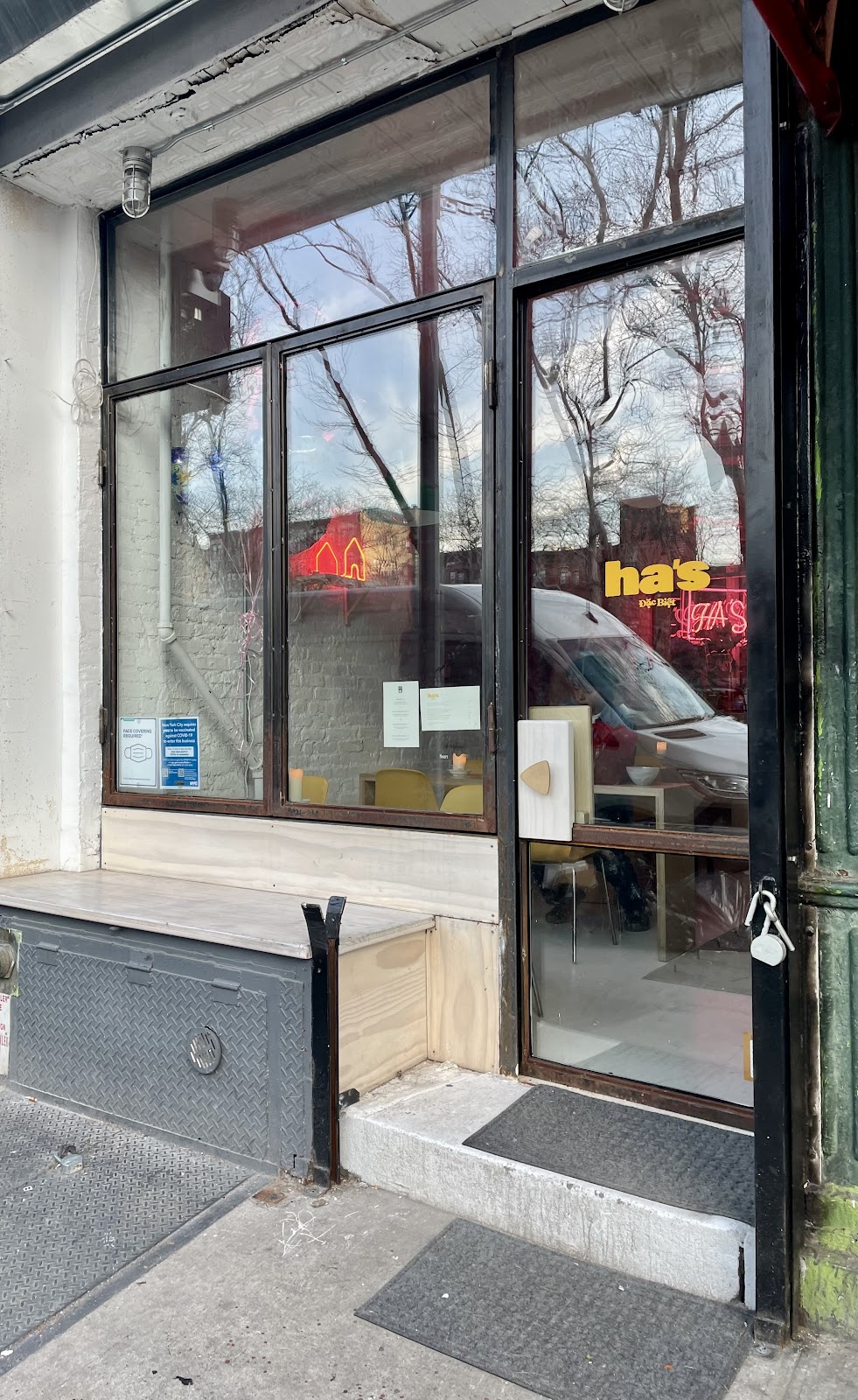
There is no phone number at Ha's Snack Bar. There is no menu online. There are only 24 seats and a chalkboard that changes every day, filled with dishes that Anthony Ha and his wife Sadie Mae Burns cook from a combi-oven and one electric burner on the Lower East Side—a setup that requires what one observer aptly called "Simone Biles–level" precision. The fact that this tiny restaurant at 297 Broome Street is the only New York establishment to land on Bon Appétit's 20 Best New Restaurants of 2025 list feels less like recognition and more like confirmation of what the city already knows: this place is nearly impossible to get into.
Reservations on Resy drop like limited-edition sneakers and vanish just as quickly, leaving most diners to either refresh obsessively or show up in person, joining the lineup that stretches down Broome Street on any given night. The permanent home of the once-nomadic pop-up Ha's Đặc Biệt, the snack bar has spawned the kind of devotion usually reserved for hard drugs and harder-to-find resale tickets. Time Out called it a Lower East Side obsession. The Infatuation called it impossible-to-book. Both are understating it.
But the hype exists because the food demands it. A vol-au-vent arrives puffy and golden, filled with curried lobster and sweetbreads—luxe proteins treated with the kind of casual restraint that makes them taste better than they sound. Snails in tamarind butter sing with acid and umami. Bass crudo gets dressed in nuoc cham, the Vietnamese fish sauce condiment that tastes like the ocean figured out how to be delicious. A Spanish tortilla cradles crab and sweet chili. The pâté chaud, a flaky pastry folded around savory meat, is the kind of thing you eat and then immediately wonder why you've never had it before. What Ha and Burns have done is blend Vietnamese and French techniques into dishes that feel simultaneously generous and restrained, ambitious yet approachable—the kind of small plates that don't need a narrative to justify themselves.
The lack of digital presence is not a gimmick, though it certainly functions as one. It's a philosophy. No menu posted online means each visit is genuinely different, a daily negotiation between what the kitchen feels like cooking and what ingredients showed up that morning. The wine list leans natural, which tracks: in a 24-seat room with one burner, you're not interested in wine that plays it safe. Everything here is a small, intentional choice made by two people who have figured out how to do more with less.
If you want a seat, arrive early and prepared to wait, or keep your finger on the Resy app at the moment reservations drop. This is not a restaurant that rewards planning—it rewards persistence.