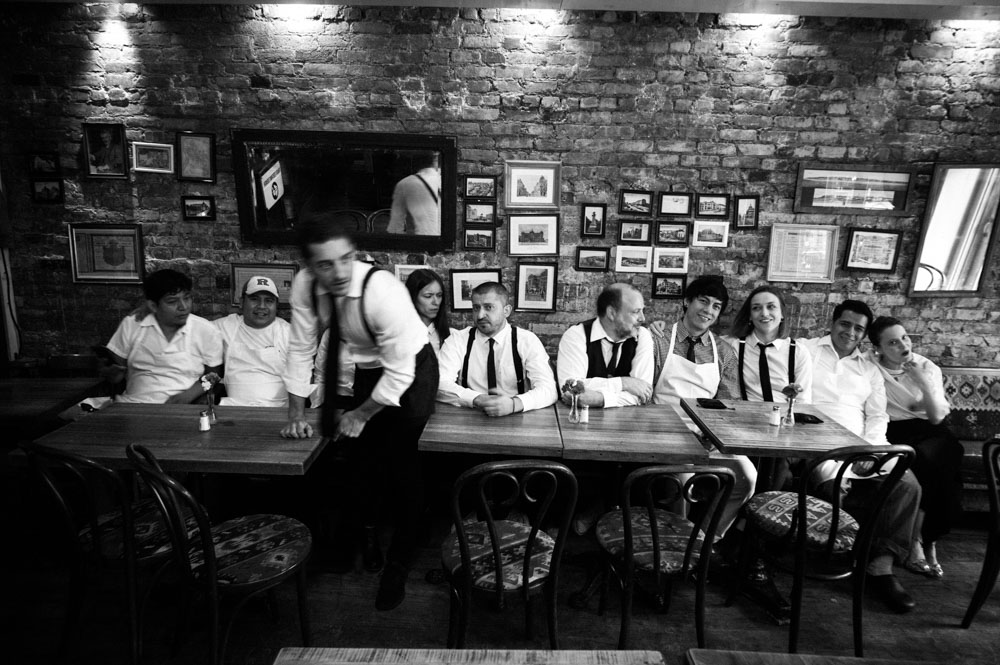
When Kafana swung open its doors on Avenue C in 2008, it arrived without fanfare. The New York Times would eventually notice, but the cozy East Village space never became a scene. That absence of hype is precisely what makes it invaluable. Here, in a room cluttered with Yugoslav memorabilia, you get the real thing—not a reinterpretation, not a modernized take, but actual Serbian food cooked with the conviction that this is how it's supposed to taste.
The menu reads like a greatest hits of Balkan pork: čevapi, those finger-shaped minced lamb sausages with their perfect char; pleskavica, the gloriously decadent lamb-beef-veal patty that makes a burger seem quaint by comparison; karadjordjeva, a veal roulade stuffed with kajmak and rolled in breadcrumbs; prebranac, a bean stew that tastes like home if home is somewhere near Belgrade. There's gibanica too, the cheese-filled phyllo pastry that arrives warm and flaking. These aren't exotic ingredients rendered precious. They're working-class food, rendered with absolute respect.
But here's where Kafana gets interesting beyond the meat: the wine list is extraordinary. Two pages deep and weighted heavily toward Balkan producers, it houses one of New York's largest selections of orange wines. This wasn't some calculated pivot toward the natural wine crowd—it's simply what makes sense when you're pouring wines from Georgia, Albania, and the regions that defined Yugoslav viticulture. Walk in as a homesick Serb or as an adventurous eater seeking genuine flavors from a culinary tradition most New Yorkers have never encountered. Either way, order the čevapi, order the pleskavica, and ask for a recommendation from someone who actually knows these wines.
Sixteen years in, Kafana has remained largely unchanged. The space is small, the aesthetic frozen in time, the commitment to authenticity absolute. In a city obsessed with the new, this is the quiet rebellion we need—a restaurant that never chased relevance because it was too busy being real.