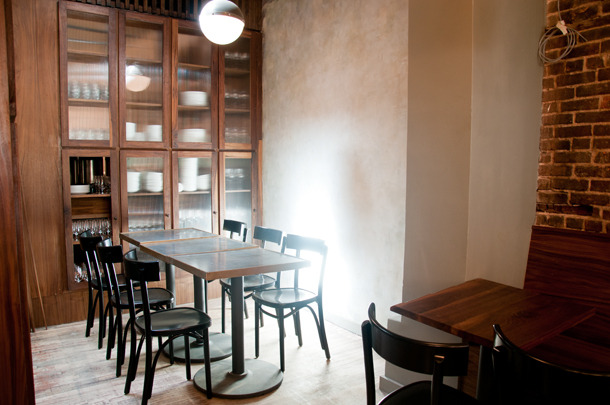
When Ignacio Mattos and beverage director Thomas Carter opened Estela in 2013, they weren't trying to start a movement. They took over the former Knitting Factory space above Houston Street and began cooking the food that made sense to them: Mediterranean-inflected small plates built on the bones of classical technique but wired with unexpected umami, acidity, and texture. What happened next wasn't inevitable. It was a restaurant that felt like an answer to a question downtown diners didn't yet know they were asking.
The menu reads like a greatest hits album that somehow never grows tired. The endive salad still arrives dressed in a way that makes you reconsider what an endive can be—sourdough breadcrumbs, cow's milk cheese, walnuts, each element earning its place. The ricotta dumplings with mushrooms and Pecorino sardo have the quality of a dish that seems simple until you taste it and realize the cook has thought about every gram of salt, every whisper of umami. The arroz negro with squid and hazelnuts is cooking that understands contrast. Beef tartare with sunchokes. Raw scallops crowned with flattened dates and uni. These aren't dishes that show off. They disappear into you.
Estela's Michelin star and its appearance on the World's 50 Best Restaurants list feel like official stamps on something the city already knew. What matters more is that Mattos' approach—shareable plates, restrained plating, the understanding that a restaurant should taste like somewhere specific—became the template that shaped an entire era of downtown dining. You can trace the lineage through a hundred restaurants that followed. But the imitators rarely nail what made Estela work: the complete absence of ego, the refusal to complicate things simply because complication reads as ambition.
Even now, after more than a decade, Estela feels like it couldn't exist anywhere else. Not because it's precious or self-conscious about its New York identity, but because it was built by people who understood this city's appetites and had the discipline to cook toward them without apology. The menu shifts with the seasons, but the philosophy doesn't waver. Come hungry, come ready to share, come prepared to taste what happens when a chef is still asking questions instead of resting on answers.
Get there early on a weeknight and settle at the bar if you can—you'll watch Mattos' team move through the evening with the kind of rhythm that only comes from years of knowing exactly what they're doing.