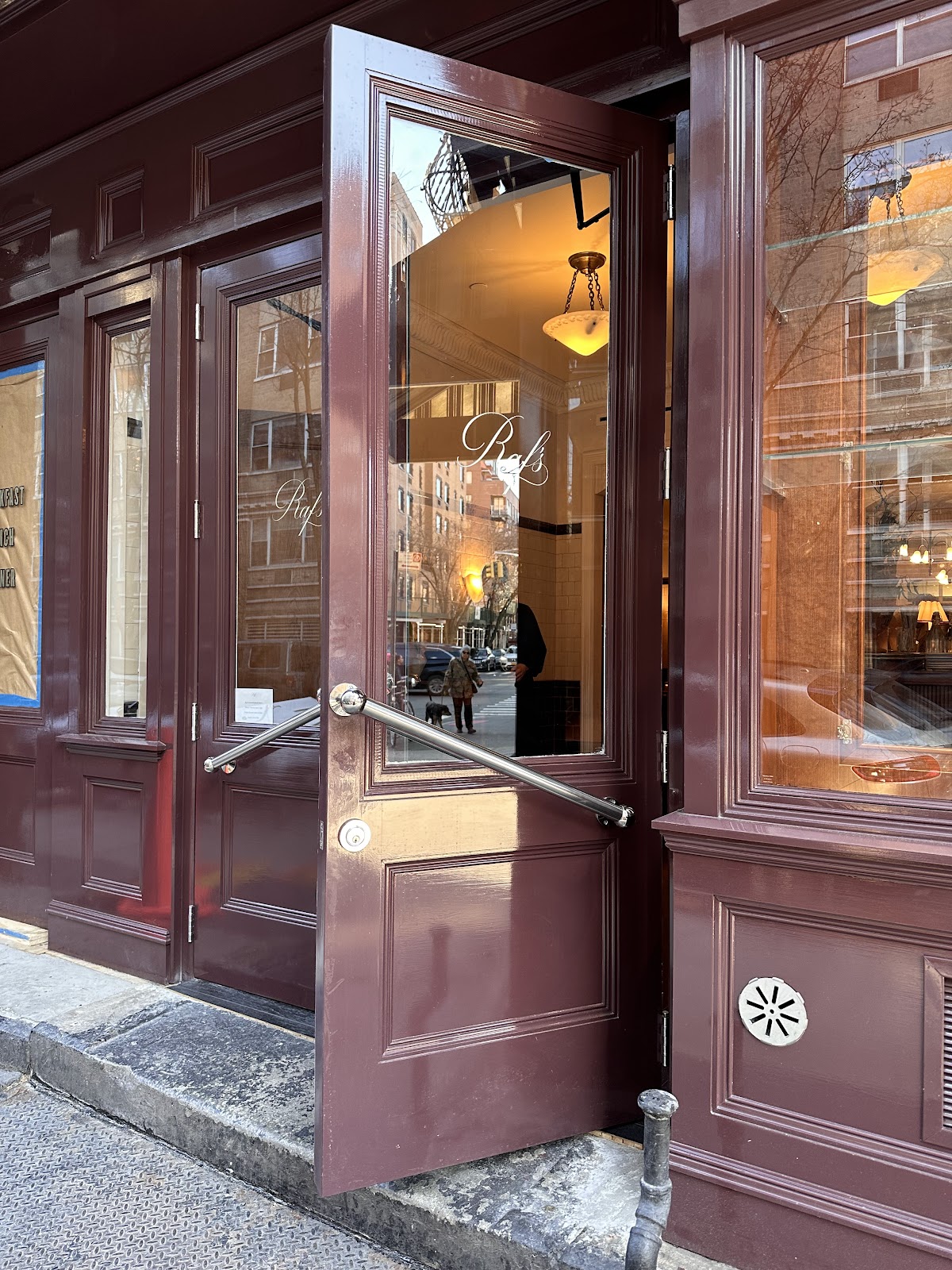
There's a particular kind of New York restaurant fantasy that Raf's doesn't just indulge—it inhabits. The space, a century-old dining room and bakery from the team behind Michelin-starred Musket Room, is lined with crown molding and distressed mirrors that wouldn't look out of place in an Architectural Digest spread. The ceiling is painted to resemble a cloudy sky. Wood-burning ovens salvaged from the 1930s anchor the kitchen. Candles flicker against the theatrical mise-en-scène. It's the dinner party you've always wanted to throw but never could, partly because you lack both a vintage hearth and the kitchen talent of chef Mary Attea.
But here's what sets Raf's apart from the usual NoHo glamour trap: it's actually bookable. Walk in on a Wednesday and you'll find seats at the bar. Call ahead mid-week and the restaurant's reservation book isn't a brick wall. This accessibility—the fact that a genuinely special meal doesn't require a fight—matters more than it should in this city. It's the difference between fantasy and reality.
The menu threads between southern France and Italy with the kind of clarity that comes from serious kitchen discipline. Carta di musica arrives paper-thin with rosemary, Parmigiano-Reggiano, and jambon de Bayonne. The cast iron sfincione (Sicilian pizza, really) pulls heat from the wood oven. Escargot comes kissed by smoke. A roast chicken appears simple until you taste it. A dry-aged côte de bœuf reminds you why the French and Italians built civilization around fire-cooked meat. These aren't ideas about food. They're the thing itself.
Pastry chef Camari Mick handles the bakery side with the same unadorned precision. Nothing is gimmicked. Nothing whispers rather than speaks. The room fills nightly—rarely quiet, always humming—but the noise is the sound of people understanding they're somewhere worth being.
Go on a weeknight. Arrive early enough to claim a bar seat, or book three days out when the calendar still has room to breathe.