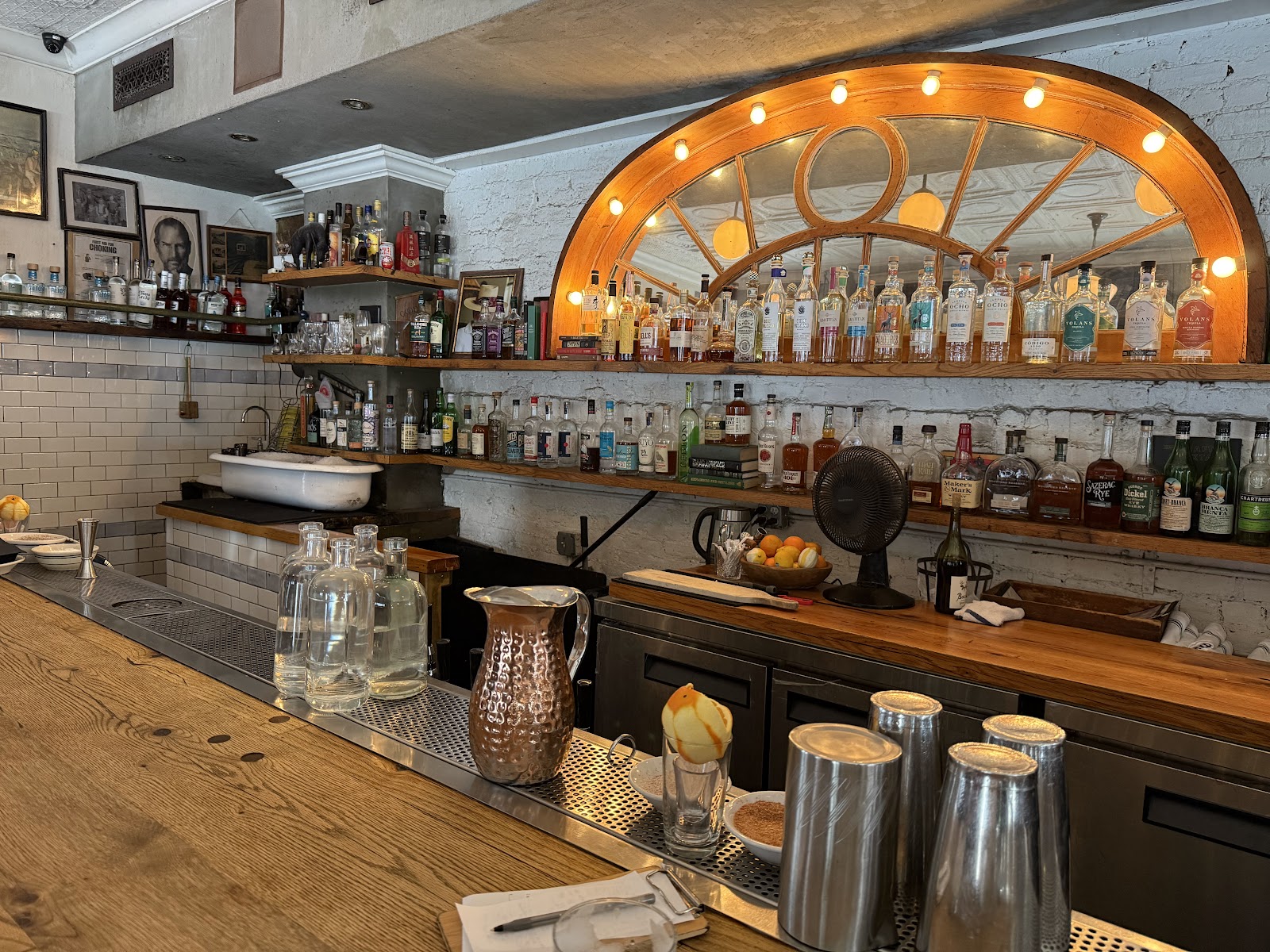
There's a particular kind of bar that becomes indispensable to a neighborhood—not because it's written up in enough places, but because locals simply won't stop going there. Goodnight Sonny, which opened at 134 First Avenue, is that bar. Built by Robert Ceraso and Jason Mendenhall, the team behind The Wayland, it occupies the rare space between dive and serious cocktail operation: mahogany bar, tile floors, moody dim lighting that deepens as the night stretches on. The setup is deliberately unglamorous, which is exactly why it works.
The raw bar is the draw. Wellfleet oysters from Cape Cod and Black Duck Salts from Hog Island Bay arrive properly briny and cold; littlenecks steam open in white wine, garlic, and serrano pepper; there's a smoked-salmon roll with Acme fish, fennel frond, and crème fraîche that tastes like someone actually thought about what they were building. The steak tartare is the kind of thing you order when you trust the kitchen, which by the second week in, you do. The roast pork sandwich—a late-night sleeper—sits heavy and right. The cocktails are good cocktails, not exercises in molecular gastronomy. The crowd is good. The vibes, as they say, are good.
What makes Goodnight Sonny remarkable is the Thursday-night phenomenon. First Avenue doesn't typically lock in on a weeknight; it's tourist corridor, weekend noise. Yet by 9 PM on a random Thursday, Goodnight Sonny is standing-room-only with actual neighbors, people who work in the neighborhood, people who live three blocks away and have decided this is their spot. Scarr's Pizza co-founders publicly named it "the late night joint" for the East Village—that kind of real-neighborhood credibility doesn't happen by accident or marketing spend. It happens when a bar stays open until 4 AM, serves good food without pretense, and lets you order a dollar oyster or just a beer, no hierarchy implied.
The happy hour (4–7 PM) sets the tone: dollar oysters, discounted clams, the kind of pricing that says we're not trying to extract maximum value from your evening. After 7 PM, the bar densifies. It stays that way. The lighting does its work—dark enough that the bar itself becomes a kind of refuge, bright enough that you can see what you're eating and who you're talking to. There is no velvet rope logic here, no table service, no sense that you've entered somewhere you need to behave differently.
If you want to see Goodnight Sonny the way it's meant to be seen—packed but not suffocating, when the kitchen is still strong and the bartenders haven't been depleted—go on a weeknight after work and sit at the bar. The 4 AM closing time isn't a gimmick; it's a commitment to being what the neighborhood actually needs.