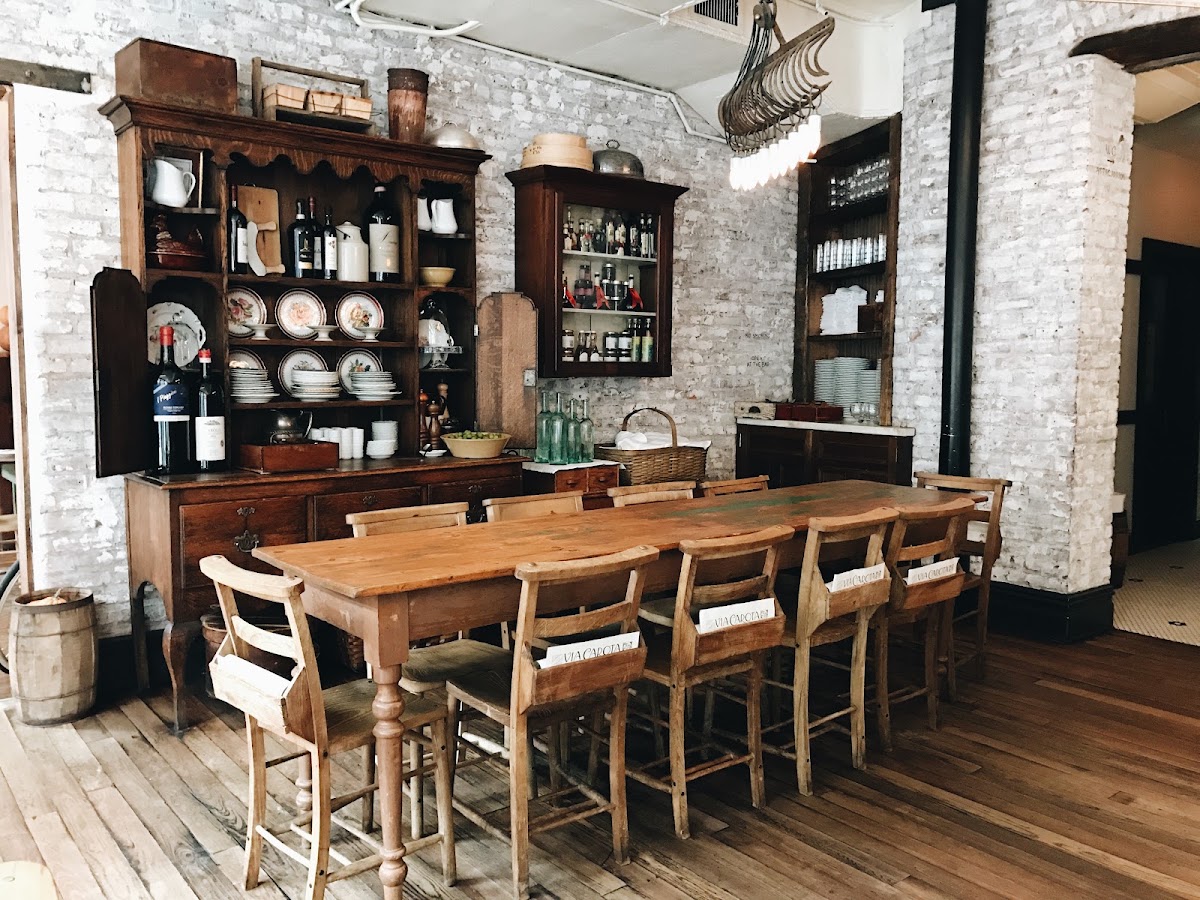
Ask any well-dressed New Yorker what their go-to restaurant in the West Village is, and they'll direct you toward Via Carota without hesitation. Since 2014, this unassuming storefront has transformed from a promising neighborhood spot into something far more consequential: the defining restaurant of one of Manhattan's most competitive dining neighborhoods. Pete Wells gave it two stars in the Times. It ranked fourth on his best restaurants list last year, fifth this year. These rankings miss the point. Via Carota matters because it has somehow gotten better while refusing to change.
The brilliance of Jody Williams and Rita Sodi lies in what they've avoided. There is no theatrical plating here, no ingredient lists that read like a chemist's inventory, no visible effort to impress. Walk in and you'll find a narrow room filled with the kind of people you'd expect: locals, tourists who've heard the gospel, the occasional film actor slipping in quietly. The menu, written in Italian on chalkboards, changes with the seasons and the whims of the market. It's honest food that respects its sources without genuflecting to them.
The cacio e pepe arrives as it should: dangerous with black pepper, the pasta properly al dente, the cheese binding into a sauce rather than clumping. The pappardelle with rabbit ragù tastes like something from a Roman trattoria in 1987, before Instagram and before anyone thought to call their cooking "rustic." The carciofi alla Giudia—those crispy, fried artichokes—are the kind of thing you'll find yourself ordering even when your table is already crowded with plates. The insalata verde reminds you that salad is not an afterthought. The svizzerina, hand-chopped steak finished simply, demonstrates what happens when you trust your ingredients and your knife skills.
The walk-in only policy has become legend, spawning neighborhood folklore about two-hour waits and the determination it takes to secure a table. This seems absurd until you're standing outside with a reservation list that extends down the block, watching the devoted queue in autumn cold or summer heat. In a city obsessed with accessibility and convenience, Via Carota has built its mythology on the opposite: scarcity, patience, the small thrill of earning your dinner. It's a model that shouldn't work, and yet it has become the neighborhood legend that still defines dinner in the Village.
There's a particular kind of New York success that involves doing one thing exceptionally well, without apology or expansion. Via Carota has achieved it. Not through gimmickry or novelty, but through the discipline of seasonal cooking and the restraint to know that sometimes a plate of good pasta with proper sauce is enough. In a city of infinite dining options, this kind of clarity is rarer than any Michelin star.