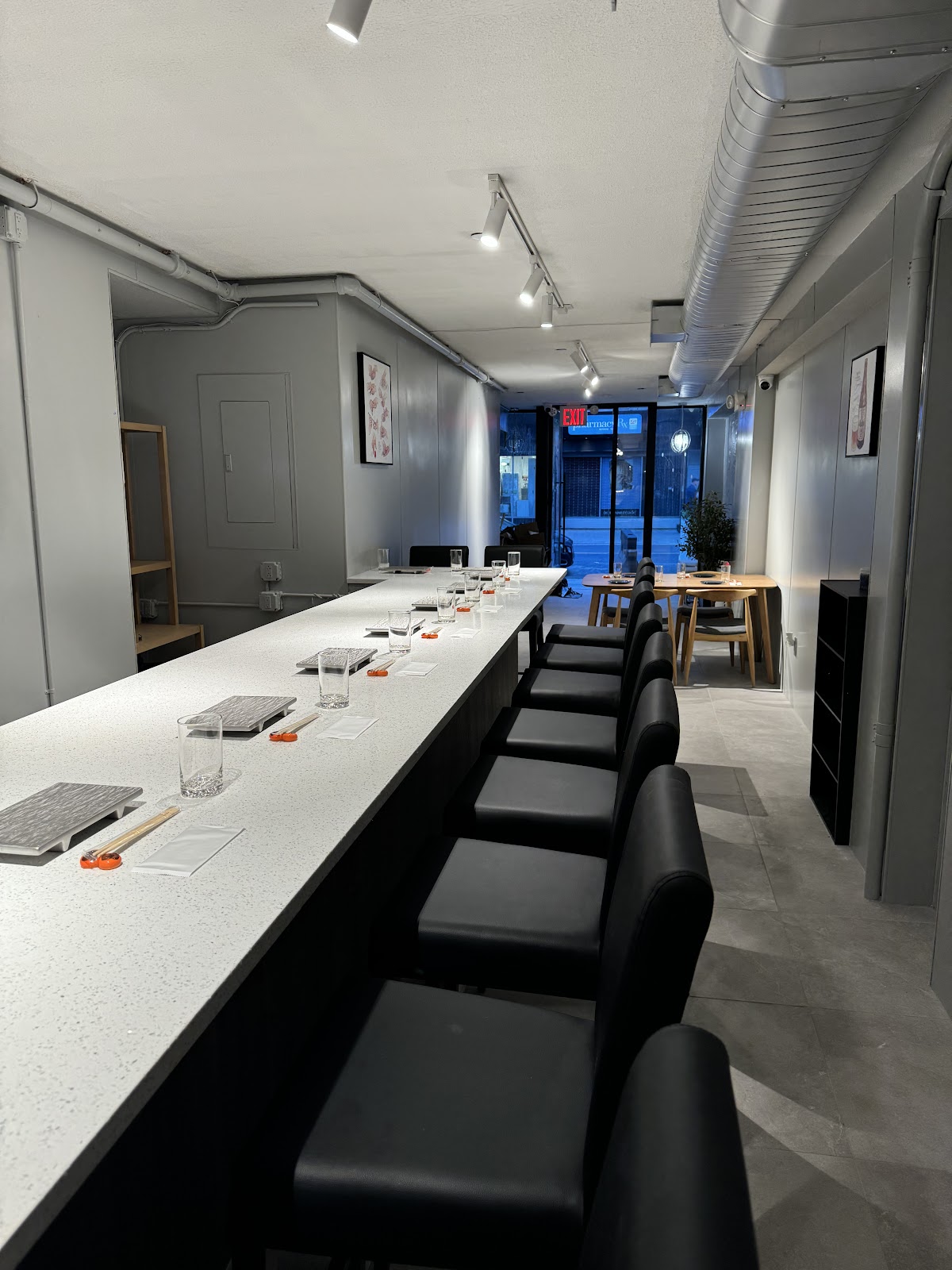
There's a particular kind of hunger that strikes when you realize you can order your 30th piece of A5 wagyu nigiri without guilt. SourAji, the Japanese import now operating two New York locations, has engineered that feeling into a business model—and it's working. The restaurant has become the rare viral sensation that actually delivers on its premise: a legitimate omakase experience, followed by a blank check for premium cuts, all for under a hundred dollars.
The format is straightforward but smart. You start with a 14-course chef's selection omakase—the kind of structured progression that teaches you something about sushi. Then comes the main event: unlimited rounds of nigiri. The rotation shifts daily, but expect otoro (the unctuous belly cut), akami (lean tuna with its clean minerality), torched wagyu with yuzu-kissed brightness, and Hokkaido scallop. Food creators have documented the competitive eating spectacle on TikTok with good reason: there's legitimate theater in watching someone hit their 50th piece while the chef quietly keeps plating.
What makes SourAji functionally different from the all-you-can-eat sushi mills scattered across the city is the omakase foundation. The chef isn't just opening a freezer door. The initial courses establish technique, ingredient quality, and flavor progression. You taste the difference in fish before you're let loose on the unlimited portion. That matters. It's the difference between a gimmick and an actual restaurant.
The economics are admittedly counterintuitive. A5 wagyu nigiri at most high-end omakase bars costs $8 to $12 per piece. Even the most moderate eater could easily spend $150 to $200 on those alone. At $98 total with unlimited sake and beer included, SourAji is either operating on extraordinary volume or has found a supply chain most restaurants haven't accessed. Either way, the mathematics work in your favor. The value proposition is real, not just Instagram-real.
There's a criticism lurking here about quantity over quality, about the degradation of omakase into a competitive sport. But that's partly the point. SourAji isn't pretending to be a three-Michelin-star temple. It's democratic sushi with precision. You get the chef's expertise during the omakase course, then you get to chase your own appetite. The two coexist. That's rare enough in New York to warrant the hype.