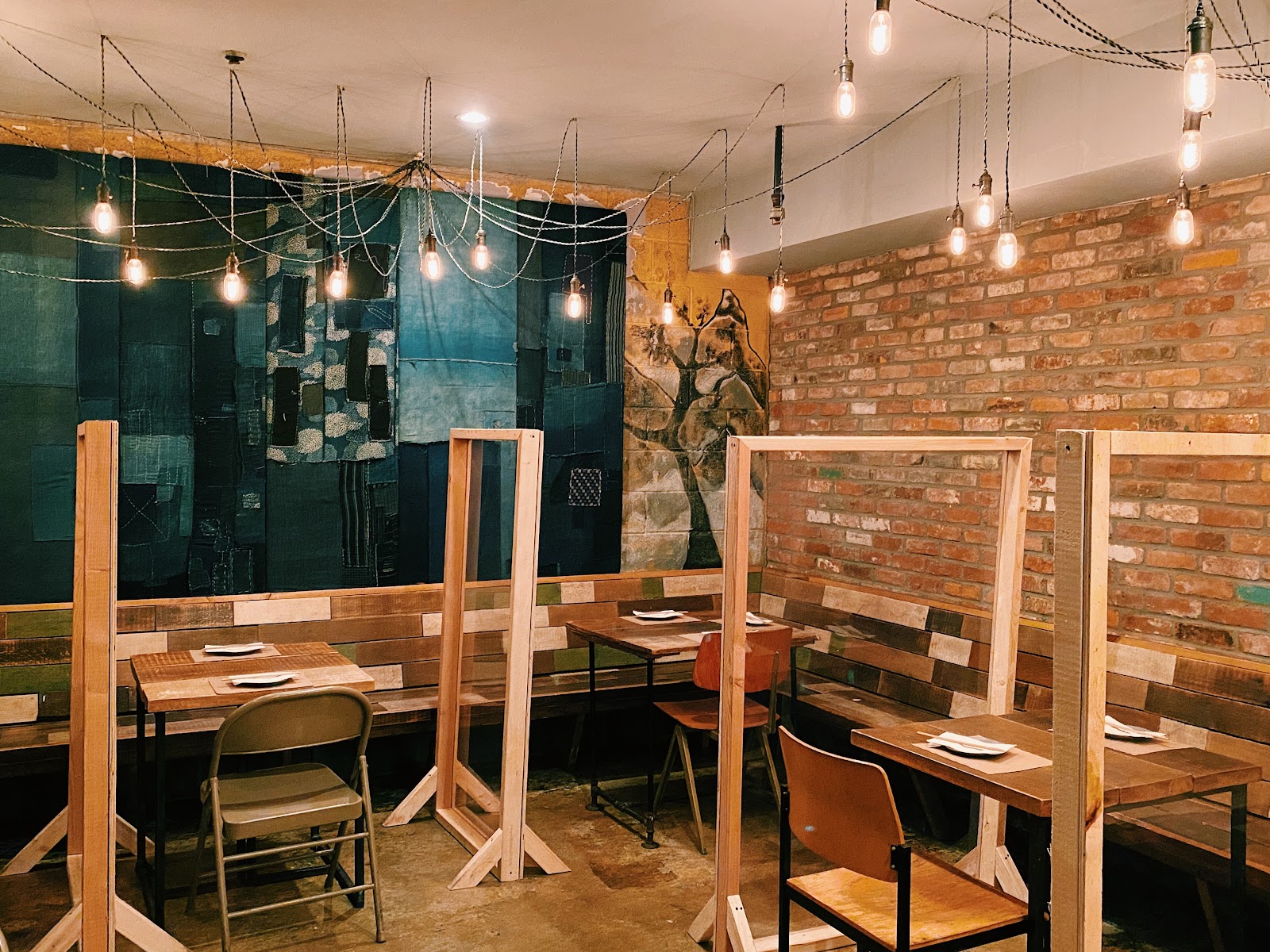
Walk past the unmarked stairwell on West 35th Street enough times and you'll miss it entirely. That's probably the point. Izakaya MEW opened in 2013 with a deliberate stance against the polished minimalism that had come to define Japanese dining in New York: no sushi counter as the gravitational center, no Instagram-bait plating, no strategic silence. Instead, descend into a brick-walled room hung with dangling lights and retro collectibles, where the noise level signals something real is happening.
The menu reads like the actual Tokyo izakaya experience most New Yorkers encounter once and never find again. Geso kara—lightly battered fried squid with the snap of properly executed tempura—arrives as a vehicle for beer. Aged tofu sits quietly on its own plate, asking nothing but attention. The kimchi cream udon is the kind of small dish that expands when you eat it, the broth building on itself with each spoonful. Salmon sashimi tacos occupy that deliberate space between tradition and New York appetite, while yakitori and tonkatsu round out an menu structured entirely around sharing, conversation, and the consumption of alcohol. This is not refinement theater. This is food built to sustain a night.
What makes MEW's decade-long obscurity notable is that it works. Regulars—the people actually shaping how this city eats when no one's watching—return because the prices refuse to climb with Midtown's rents, because the late-night Friday and Saturday kitchen keeps feeding people until 1 a.m., and because the place has never compromised its fundamental identity for headlines. It sits steps from Madison Square Garden, Macy's, and the relentless churn of Times Square tourism, and somehow remains almost entirely absent from the city's prestige food coverage. That's not a flaw. That's a feature.
The owner's stated mission—to marry traditional Japanese izakaya cooking with New York food culture—has been quietly executed for over a decade without fanfare or manifesto. The fusion isn't conceptual; it's practical. This is what happens when you refuse to dumb down Japanese small plates for American expectation, but also refuse to fetishize authenticity. It's a restaurant that knows exactly what it is and has never felt the need to explain it.
Go on a Friday or Saturday night when the basement fills with the kind of crowd that doesn't need Instagram validation—people who know good food tastes better when it's loud and shared and slightly difficult to find. Arrive early enough to grab a table, or accept the beautiful chaos of the bar.