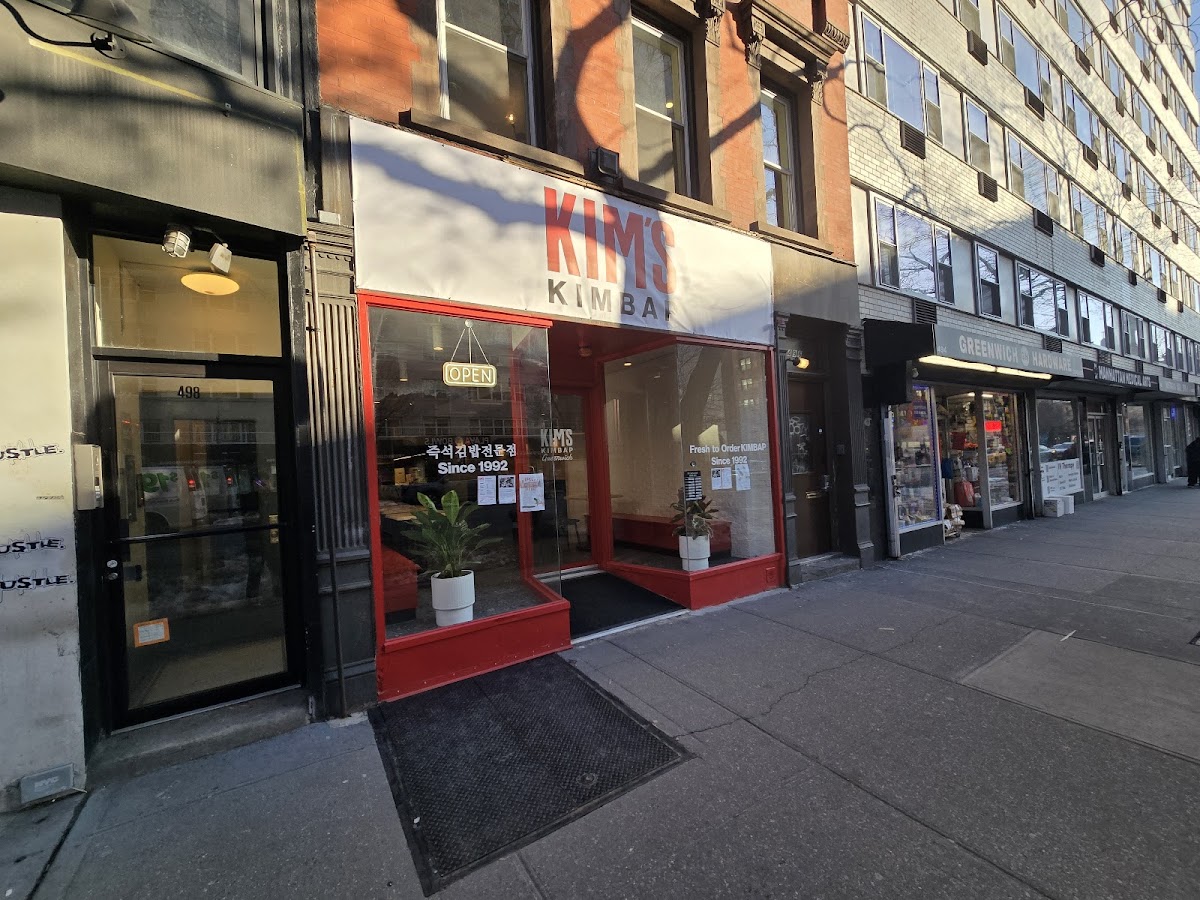
When two kimbap restaurants open within ten blocks of each other in the same neighborhood, something has shifted in New York's food landscape. Kim's Kimbap, which arrived at 496 6th Avenue in Chelsea in early 2026, didn't start this collision—but it's undeniably accelerated the West Village's unlikely ascension as the city's new kimbap hub. What was once a Korea-centric niche has suddenly become accessible, affordable, and impossible to ignore.
Kim's brings the Seoul playbook intact: burrito-sized rolls stuffed with the kind of fillings that demand respect. The bulgogi beef version arrives with caramelized meat, pickled vegetables, and egg ribbons held together by a seaweed wrapper that hasn't been apologized into submission. The spicy pork kimbap carries actual heat, not the theatrical kind. There's house-cured salmon that tastes like someone actually understood what they were doing, and a tuna mayo that splits the difference between Japanese convenience and Korean soul food. Even the chicken tender kimbap—the option that sounds most forgettable—delivers crunch and satisfaction.
What makes Kim's matter is authenticity without preciousness. These rolls don't whisper. They're meant to be eaten at lunch, standing up, without ceremony. The portions are generous enough that one roll constitutes a real meal, not an Instagram moment followed by a second stop for actual food. This is the opposite of trendy. It's practical.
The kimbap boom happening around Chelsea and the West Village feels less like a coordinated trend and more like an inevitable correction—the city finally catching up to what Korean immigrants have known for decades. Kim's Kimbap's arrival simply made it official: this is where you come now when you want rice rolls that fill you up and don't require a culinary education to appreciate.