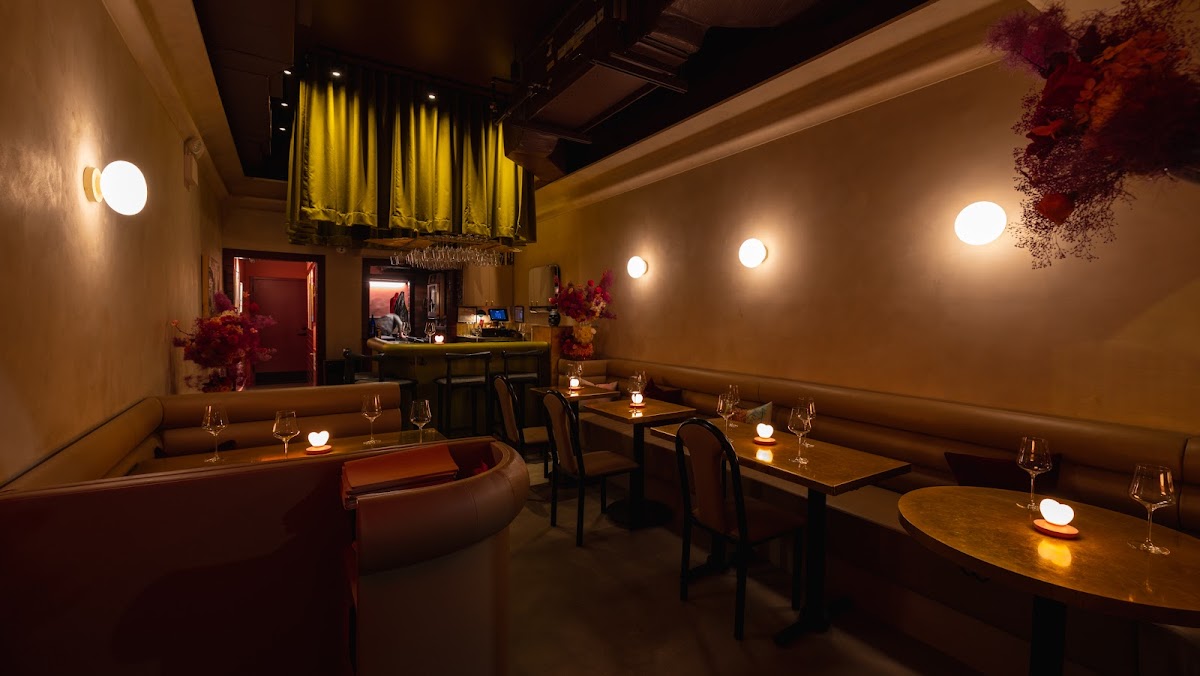
There's a restaurant in New York with 20 seats, a Michelin star, and a pay-what-you-can Sunday brunch. It's called HAGS, and it opened in 2022 with a mission that should embarrass the fine dining establishment: feed people as they are. Chef Telly Justice and Camille Lindsley built something that works as a restaurant first and a manifesto second—which is precisely why the manifesto lands so hard.
The food doesn't announce itself as political. A plate of wagyu tartare is just perfect tartare: mineralized, buttery, unadorned enough to taste like meat. Razor clams arrive with the kind of precise char that suggests someone paid attention during service. Berkshire pork tastes like pork should—rich and substantial, not engineered into submission. But the real tell is in the details: heirloom purple Cherokee tomatoes with fava bean emulsion, a chewy corn ice cream with currant jam that tastes like late summer decided to occupy your mouth. These are the decisions of a kitchen thinking about flavor first, then figuring out how to make it matter.
What makes HAGS genuinely important isn't that it's a queer-owned restaurant—though it explicitly is one, and that specificity matters. It's that Justice has earned Food & Wine's 2025 Best New Chef recognition and Michelin's attention while operating at exactly 20 seats and refusing to play the usual games. There's no waiting list mythology. No Instagram-bait plating. No coded language about elevation or refinement. There are two tasting menus ($150 for omnivore, $140 for vegan) and a philosophical commitment to inclusivity that shows up in the food and the room itself.
The intimacy isn't incidental—it's structural. Twenty seats means Justice can cook the way she wants to cook. It means Lindsley can set a tone that feels like dinner at someone's home who happens to be an obsessive. On Sundays, that home opens to anyone willing to pay what they think the meal is worth. It's radical precisely because it doesn't feel radical. It just feels like respect.
HAGS hasn't gone viral because it doesn't have the Instagram footprint of bigger restaurants. It exists in a deliberate quiet, which may be the smartest marketing decision in New York fine dining. The people who should eat there are eating there. Everyone else will eventually figure it out. When they do, they'll discover that a restaurant can be Important—genuinely, structurally Important—without ever announcing itself that way.