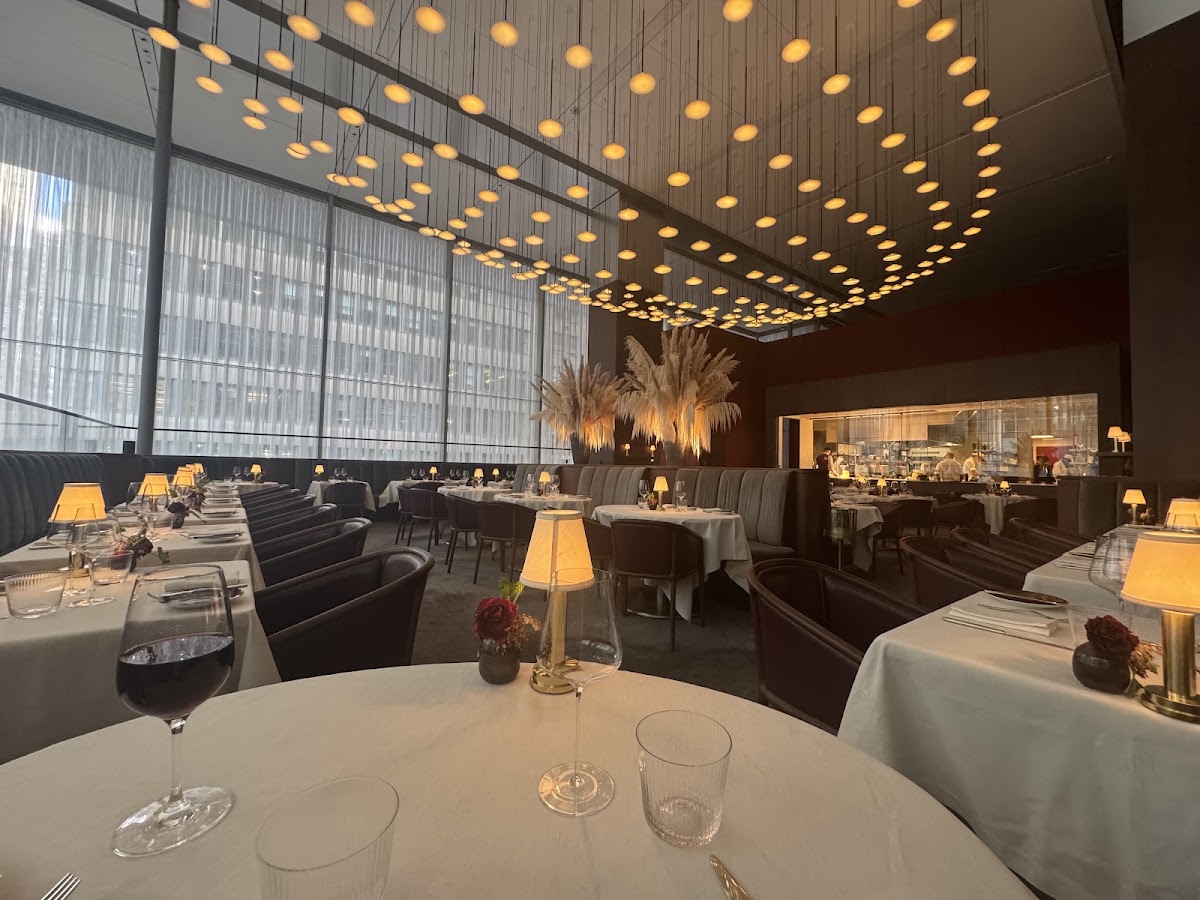
There's a particular kind of disappointment that arrives at a table set in a $2 billion office tower. Four Twenty Five, Jean-Georges Vongerichten's latest Manhattan venture at 425 Park Avenue, embodies it entirely. The bi-level space is undeniably beautiful—Foster + Partners' architectural confidence doesn't disappoint—and the technical execution across the kitchen is precisely what you'd expect from a chef of Vongerichten's caliber. Yet somewhere between the shiso and the sauerkraut, the aji amarillo and the gingerbread madeleines, something essential gets lost. The food is polished. It is also, frustratingly, boring.
The menu reads like a manifesto of global sophistication: butternut squash agnolotti, duck breast with lemongrass-coconut sauce, foie gras paired with gingerbread madeleines. These combinations should provoke thought. On paper, they do. In reality, they feel like familiar moves in a choreography we've seen executed countless times before. A steamed black bass arrives afloat in a tasteless broth—not undercooked or poorly handled, but fundamentally joyless. The uni spaghetti and fluke tartare don't fail; they simply decline to impress. This isn't incompetence. It's something more insidious: the comfort of craft without conviction.
The critical response has fractured along predictable lines. Admirers point to the restaurant's architectural grace and technical proficiency. Detractors—not wrong—observe that polished mediocrity is still mediocrity. There's a service question too, complaints about inconsistency that suggest the machine, however expensive, hasn't quite locked into rhythm. In a city with restaurants that take genuine risks, Four Twenty Five's safe execution feels like a missed opportunity.
What Four Twenty Five ultimately represents is a fork in the road for high-end Manhattan dining. On one side: the belief that precision, expensive ingredients, and a prestigious name justify a table. On the other: the conviction that restaurant cooking should still surprise you, challenge you, even occasionally disappoint you in interesting ways. Vongerichten clearly chose the former. The question is whether anyone else needs to follow.