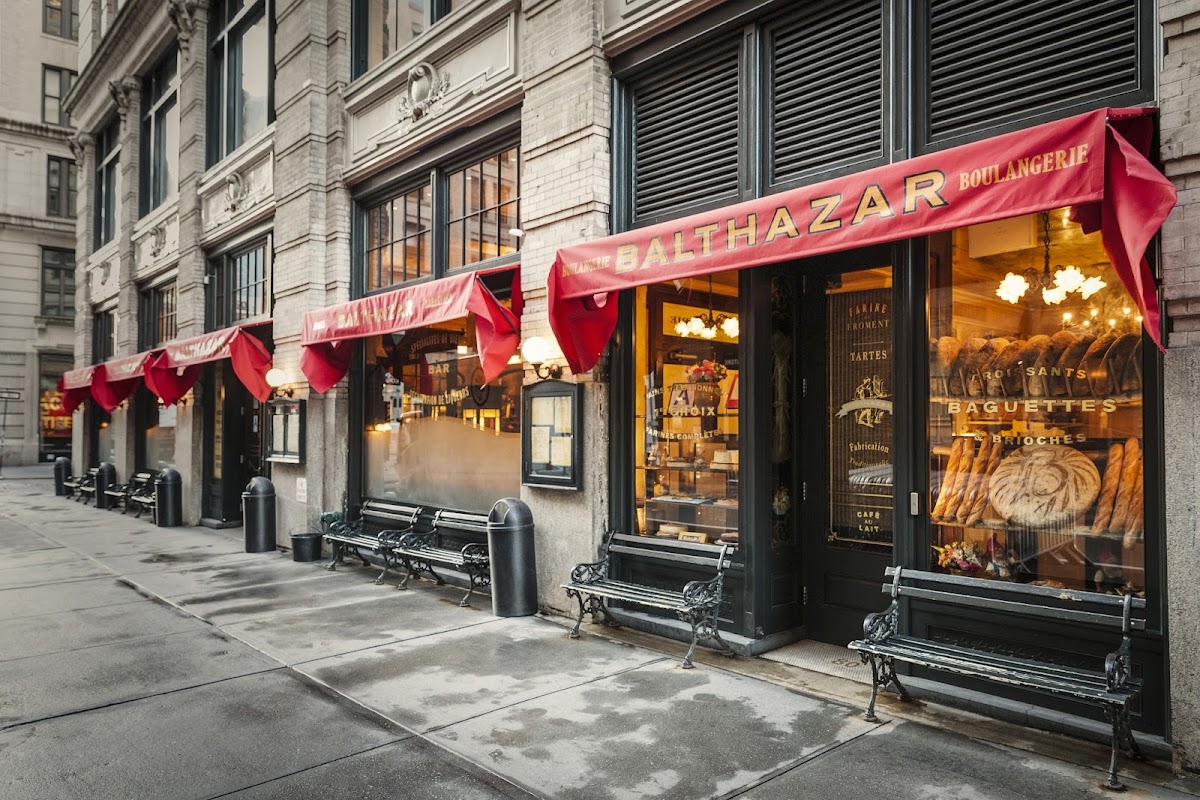
There's a peculiar honesty in Pete Wells's admission: he's fascinated by Balthazar, just not by its food. This confession captures the restaurant's essential paradox. Keith McNally's French brasserie has become a case study in what happens when atmosphere achieves such gravitational pull that culinary mediocrity becomes almost irrelevant. You don't go to Balthazar for the steak frites—though they're respectable. You go because being there is, in some ineffable way, still being somewhere that matters.
Balthazar splits its critics into two irreconcilable camps. One acknowledges it as scene-y and overpriced but recommends it anyway, understanding that New York restaurants operate on a different calculus than mere food quality. The other finds the whole enterprise indefensible: inconsistent service, mediocre cooking, dishes that feel coasted-on rather than cared-for. Both camps are right. The escargot is fine. The French onion soup is fine. The warm chocolate cake with white chocolate ice cream is fine. Fine, repeated often enough, becomes a kind of dishonesty.
What makes Balthazar worth examining now, nearly a quarter-century after its opening, is that it refuses to improve. A normal restaurant either elevates its cooking or gradually empties. Balthazar does neither. The crowds remain fierce, the tables remain impossible to book, and the food remains precisely adequate enough to justify the prices to those who want to justify them. That crowded, hot, smelly dining room—the very atmosphere that drives some critics to despair—is the same atmosphere that makes others feel like they're witnessing something essential about how New York actually works.
If you resent paying premium prices for average cooking in a theater-like setting, Balthazar will confirm every suspicion. If you understand that restaurants are about more than food, that scene and history and the simple fact of being somewhere culturally significant matter, then Balthazar's dominance makes perfect sense. The caramelized banana ricotta tart won't change your life. But the feeling of being elbow-to-elbow with a hundred other New Yorkers, all of you complicit in the same expensive fiction, somehow still does.