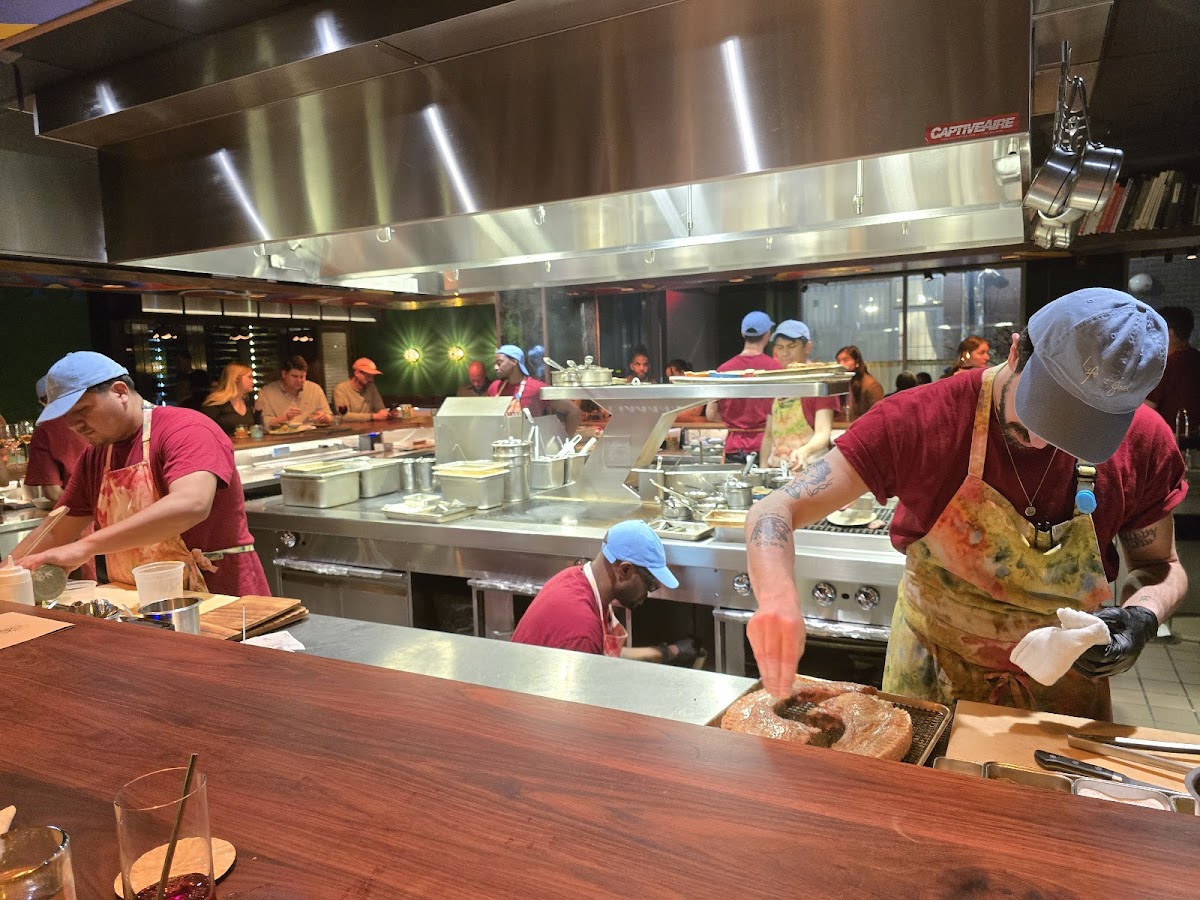
When Paul Carmichael opened Kabawa in the former Momofuku Ko space in 2024, he didn't arrive as a chef looking to elevate Caribbean cooking for fine dining audiences. He arrived as a host. That distinction—which Carmichael himself has made clear by preferring the title 'master of ceremonies' to 'chef'—marks the philosophical distance between Kabawa and the sterile formality that has long defined New York's fine dining scene. The three-course prix fixe at $145 isn't structured as a procession of small plates designed to impress; it's structured as an invitation into a Barbadian home, warm and unhurried, where the food speaks for itself.
The menu moves with intention. Slow-roasted goat arrives with spicy scallop creole—the meat so tender it dissolves, the scallops briny and precise against the heat. Pepper shrimp comes dressed in sorrel, Scotch bonnet chile, and thyme, the herbaceous brightness cutting through fat. Jerk duck sausage carries the char and smoke that Caribbean cooking demands, not as decoration but as foundational flavor. Each dish acknowledges the ingredients' origins while respecting their power. There's no unnecessary plating, no excess. The cooking is confident enough to let goat be goat, shrimp be shrimp.
That Food & Wine named Kabawa the best restaurant in the United States for 2026 isn't a surprise to anyone who understands what's been missing from New York's dining landscape. Caribbean cuisine has been the cuisine of neighborhoods—of home cooks and family tables, of Saturday night celebrations and Sunday dinners. It has rarely been treated with the seriousness and resources afforded to French, Japanese, or Italian cooking. Kabawa, backed by Momofuku's infrastructure and Carmichael's clarity of vision, has changed that calculation. The East Village spot beat out heavy hitters across the country, which means the national food establishment has finally caught up to what should have been obvious: Caribbean cooking, cooked with this level of skill and intention, is not just worthy of fine dining. It's better than fine dining.
What makes Kabawa matter most is not the award or the pedigree. It's the permission it grants. Other chefs, other restaurants, other neighborhoods can now point to Kabawa's success and recognize that there's an audience ready for Caribbean food served on its own terms—not as fusion, not as elevated comfort food, but as serious, sophisticated cooking rooted in place and culture. The space itself reinforces this: it's warm without being precious, welcoming without being casual. You can feel Carmichael's hand in every detail, from the menu structure to the way service moves at the rhythm of conversation rather than the clock.
Reservations at Kabawa are difficult to secure, and justifiably so. But the difficulty of getting in shouldn't obscure what's actually happening at Nolita and 1st: a chef from Barbados is cooking the food of his home at the highest level, in a city of eight million people who have been waiting for exactly this, whether they knew it or not. That Food & Wine recognized it first, and that the recognition came so quickly, suggests the food world finally understands what should have been understood all along.