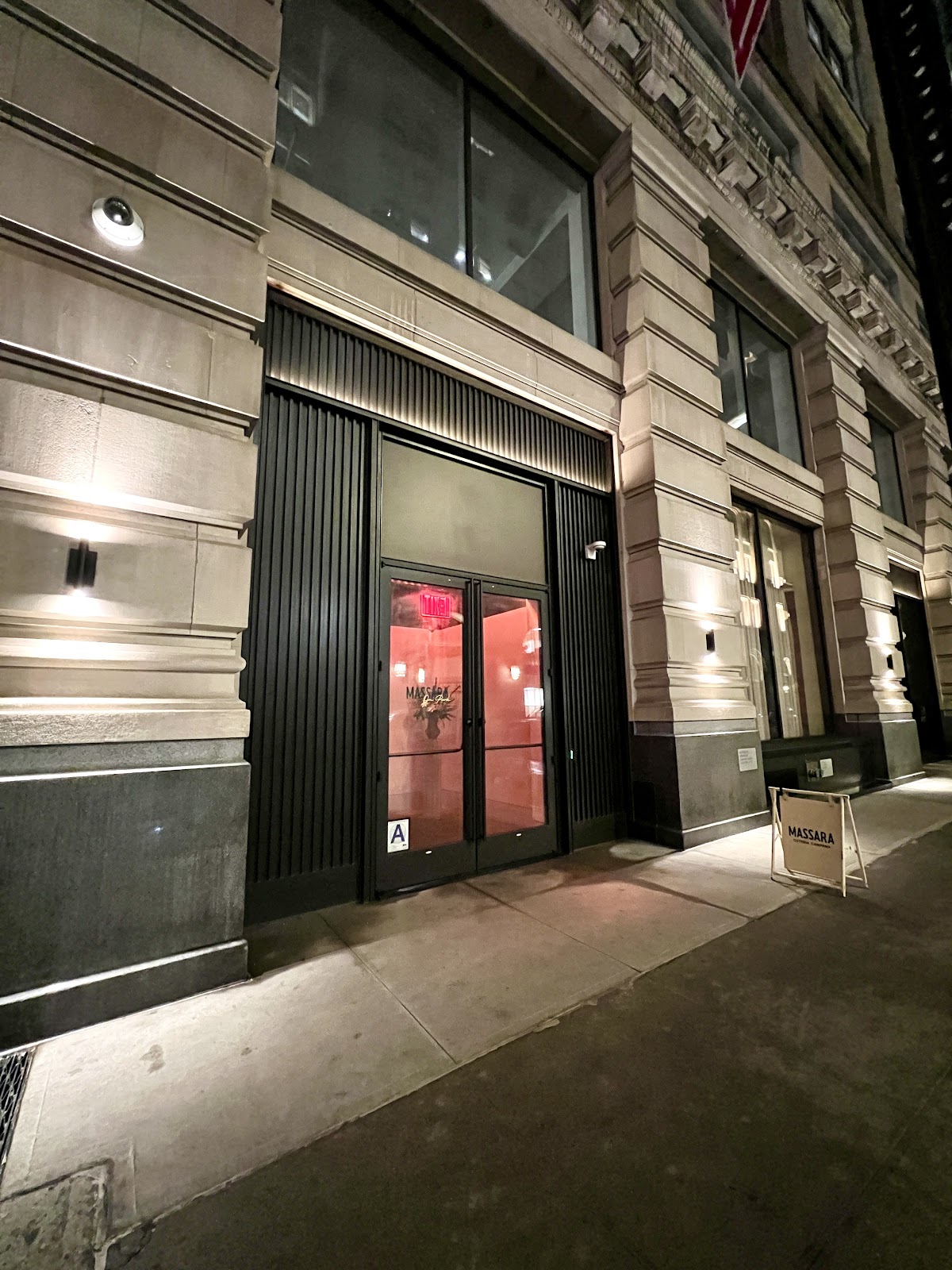
When Massara opened in 2024, it arrived with the kind of momentum that turns reservation links into digital slugfests. As the sister restaurant to Rezdôra, Michelin's favorite Italian spot, it came pre-loaded with credibility. Chef Stefano Secchi brings Campanian cuisine to a dining room anchored by a Naples-imported wood-fired oven. On paper—and for some diners—on plate—this is exactly the kind of New York restaurant that gets people excited.
Yet Massara has become something else entirely: a Rorschach test for what we think restaurants owe us. Some critics have genuinely loved it, calling the food exceptional and the ambiance outstanding. They're already suggesting you rush in before Michelin comes knocking and reservations vanish into the ether. Others have walked out bewildered, having spent $260 for two without alcohol and left hungry, staring down a plate of cavatelli with mixed seafood or cheesemakers ravioli that looked more like a tasting note than dinner.
The disconnect isn't subtle or debatable—it's a chasm. Tiny portions at premium prices is a real problem, not a matter of preference. A cold spaghettoni with uni and raw red prawn, however elegantly plated, doesn't justify the math if you're still thinking about dinner while calculating the bill. The Margherita pizzette from that wood-fired oven might be pristine, but pristine doesn't fill you up. Secchi's technique appears unquestionable; his business model seems built for a clientele that doesn't expect fullness from their meals.
This is the rare restaurant where professional consensus matters less than your own threshold for admiring craft without feeding hunger. If you're the type who photographs every course and discusses the acidity of the pomodoro in the paccheri, Massara will probably reward you handsomely. If you're the type who measures a restaurant's worth against your appetite and your wallet, you might leave feeling like you've been charged for a laboratory experiment. The food is real. The question is whether you're dining or investing.