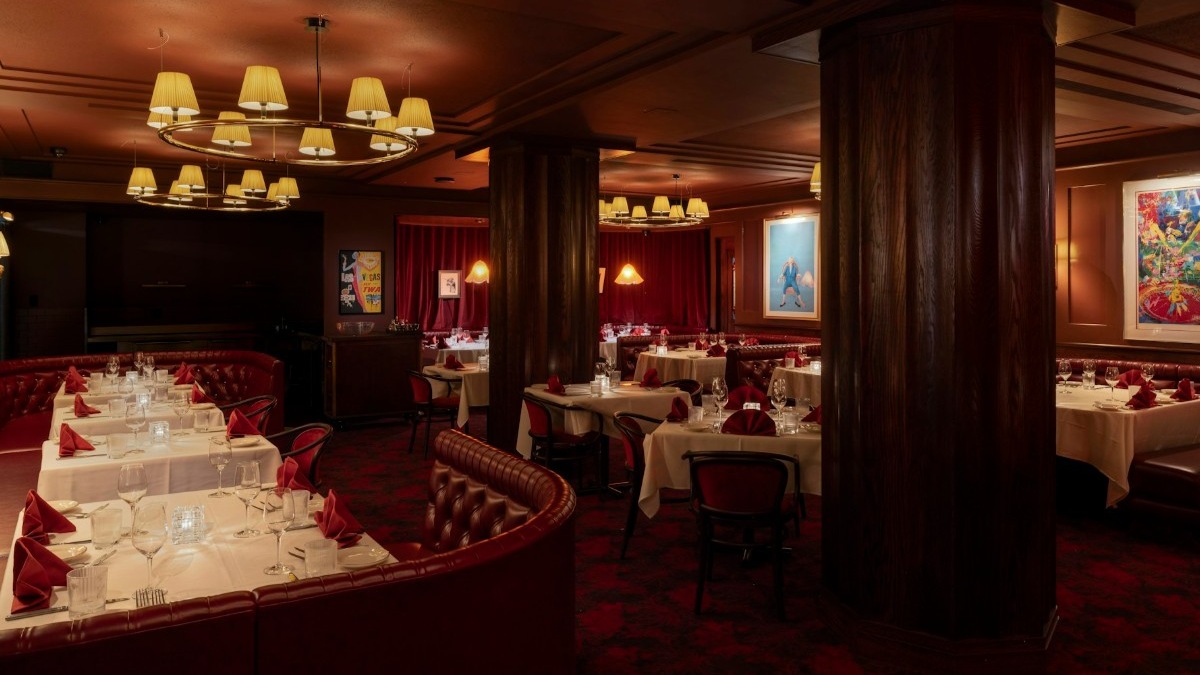
There's a particular kind of audacity required to leave Las Vegas after nearly seven decades of dominance. Golden Steer Steakhouse didn't just survive the desert—it thrived there, hosting Sinatra, Elvis, and the entire Rat Pack at tables that became as storied as the men who sat at them. So when Nick McMillan and Amanda Signorelli, who took over the original location in 2019, decided to expand into New York City, they weren't chasing trends. They were answering a question that had hung in the air for generations: what would Golden Steer look like east of the Mississippi?
The answer arrived on January 23, 2026, inside One Fifth Avenue in Greenwich Village. It's a building with its own mythology—a landmark that has presided over the neighborhood since 1927. There's a symmetry to it: a Vegas institution entering a New York institution, two buildings that have watched American culture shift beneath them. The restaurant didn't strip-mine its Vegas identity for the move. The tableside Caesar salads are here, performed with the same theater that made them famous. The prime steaks arrive with the same weight. The twice-baked potatoes and housemade sausage are unapologetic callbacks to a steakhouse language most New York restaurants have abandoned or never learned.
Executive Chef Brendan Scott brings New York credentials to the helm—stints at Montrachet, Lafayette Grand Cafe & Bakery, and Carne Mare. He understands that bringing a 70-year-old restaurant to a city obsessed with novelty requires knowing when to preserve and when to calibrate. The 16-inch whole roasted bone marrow suggests confidence. The Ship & Shore dinner—a straightforward surf and turf—suggests clarity of purpose. These aren't dishes engineered to impress critics. They're built to satisfy the kind of hunger that comes with occasion.
What matters most is that Golden Steer arrived without apology. Manhattan has high-end steak options, certainly. But it didn't have this: a restaurant that treats the steakhouse not as a museum piece or a nostalgia play, but as a living thing worth moving across the country for. The Tomahawk steaks, the Bananas Foster ablaze at tableside, the hum of a dining room full of people who showed up knowing exactly what they wanted—these are the elements that convinced McMillan and Signorelli the time was right. The Vegas glamour is real, but it's not the point. The point is the steak, the salad, and the understanding that some restaurants earn the right to be exactly what they've always been.