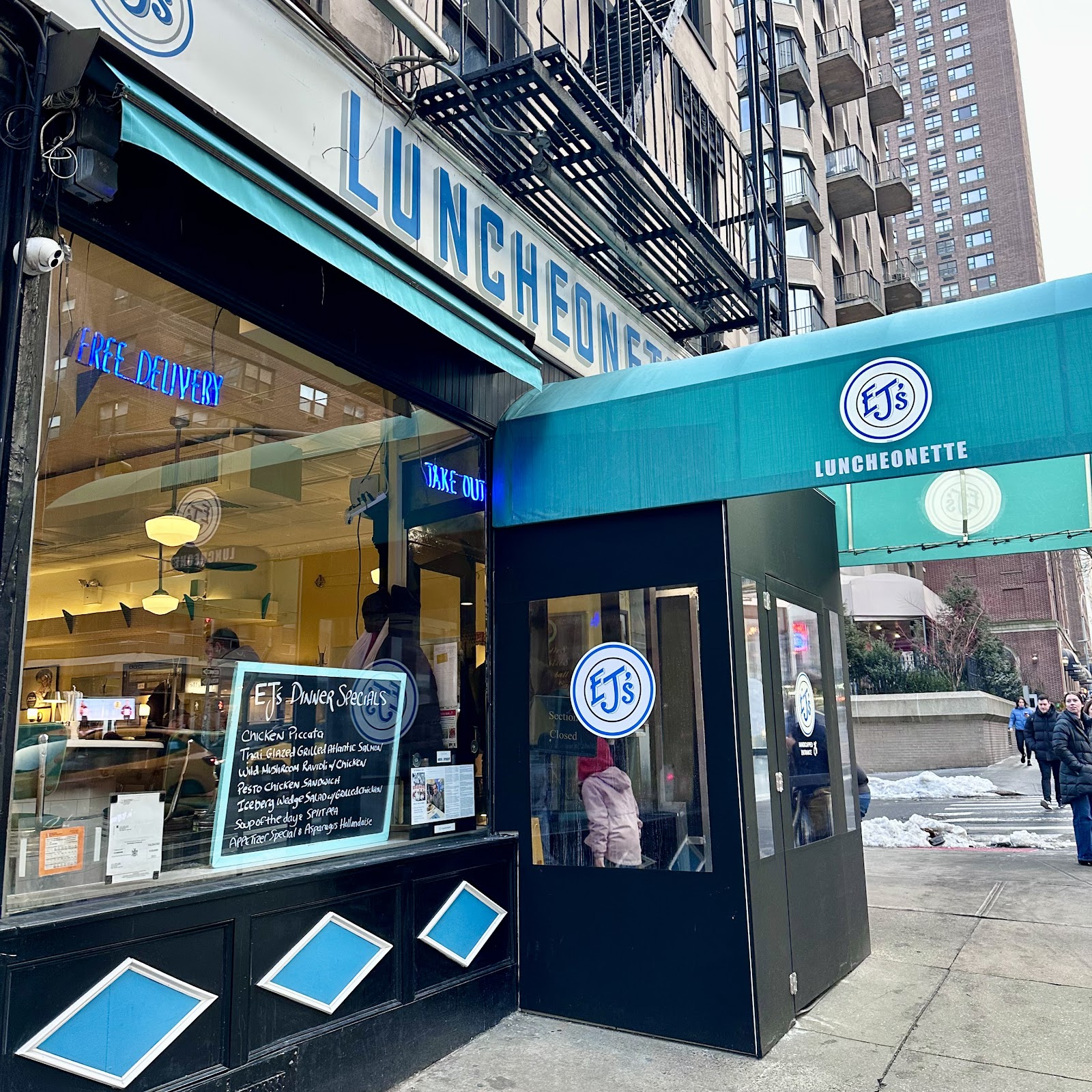
There's a particular kind of New York institution that doesn't need to shout about itself. EJ's Luncheonette, tucked into the Upper East Side since 1992, is exactly that—a 1940s-style diner where the booths are divided just deep enough for real conversation, the counter bar glows with that specific golden-hour warmth, and the background hum of satisfied diners feels like the soundtrack to every slow Sunday morning that matters. This isn't a place designed for the Instagram moment. It's designed for the moment when you're recounting what happened last night over eggs cooked perfectly to order.
The menu reads like a greatest-hits collection of diner classics, executed without pretension or unnecessary flourish. The chocolate chip pancakes—and you'll notice them on nearly every table—are the real deal, the kind that warrant a generous pour of real maple syrup. The challah french toast is locally famous for good reason: it strikes that delicate balance between custardy interior and golden crust. The matzo ball soup arrives untraditional, threaded with citrusy notes that echo avgolemono while remaining decisively chicken-forward, the kind of dish that tastes like someone's actually thinking about flavor rather than checking boxes. Weekend brunch brings Eggs Benedict variations, buttermilk fried chicken with Belgian waffles glazed in maple, and corn flake-crusted brioche french toast sticks that manage to feel both nostalgic and slightly elevated—which is to say, still deeply comforting.
What makes EJ's matter now, in an era when every neighborhood diner seems to be converting into something else, is its refusal to compromise. Yes, there are gluten-free and vegan options. Yes, there are updated Blue Plate Specials alongside the standards. But none of this comes at the expense of what made the place worth visiting in the first place. The diner decor isn't studied or ironic. The comfort isn't manufactured. This is old New York the way old New York actually felt—accessible, unpretentious, and generous with its time.
EJ's works because it understands something fundamental about breakfast: it's not about novelty. It's about ritual, about a place that knows exactly what you need on a Sunday morning and delivers it without fuss. The divided booths invite lingering. The menu invites commitment. The whole operation invites you to stay longer than you planned, to order another round of coffee, to have the conversation that matters.