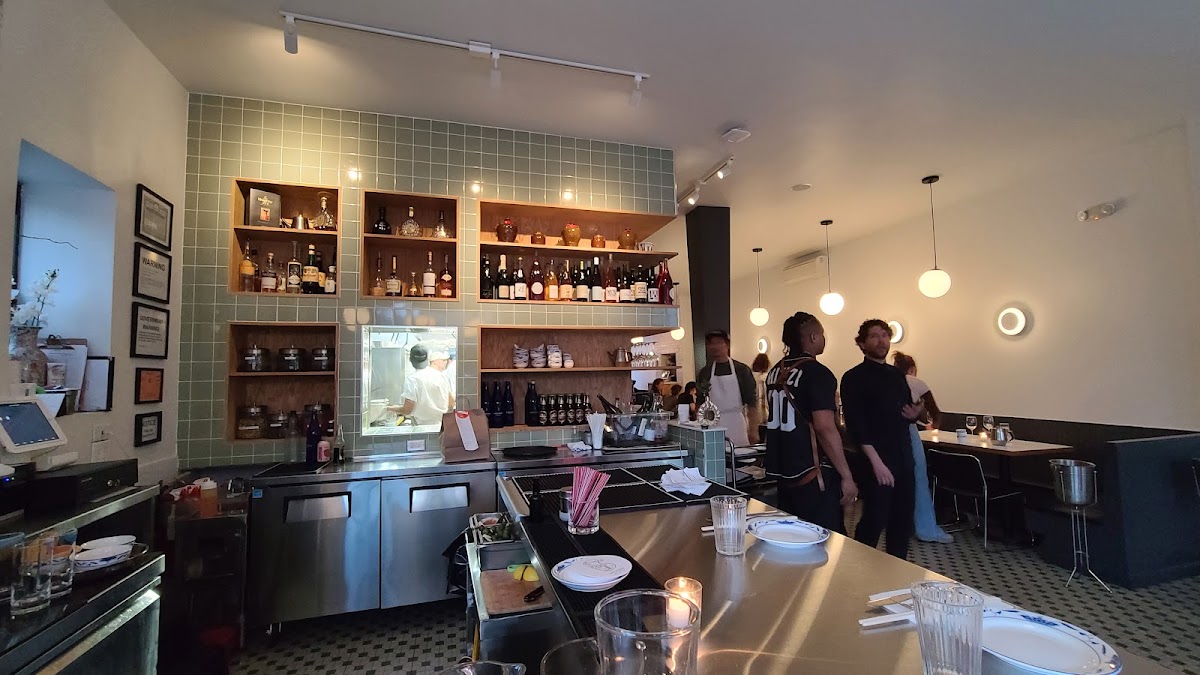
When Bonnie's opened in 2021, it arrived with the kind of momentum that usually precedes disappointment. The New York Times loved it. The New Yorker wrote about it. Grub Street made lists. James Beard voters took notice. In Brooklyn restaurant terms, this is the equivalent of transferring into a school where everyone's already heard of you—and actually wanting to sit at your table.
Calvin Eng's restaurant does what most hyped openings cannot sustain: it delivers. The menu moves fluidly between Cantonese traditions and American ingredients without genuflecting to either. A fermented black bean dip arrives with saltines instead of something more precious. Char Siu McRibs sit confidently at the intersection of barbecue and dim sum. The salt and pepper shrimp arrive exactly as they should—translucent, snappy, unadorned. A Fuyu Cacio e Pepe Mein sounds like it shouldn't work, and yet it does, because Eng understands that technique travels.
The trout here matters because it's the kind of dish that reveals a kitchen's priorities. It's treated with respect but not reverence. A whole fish cooked simply says more about a chef's confidence than anything else on a menu. When you taste it, you understand why this restaurant has staying power. It's built on fundamentals, not novelty.
There are legitimate quibbles. Service timing can lag. Food temperature occasionally wavers. But these are the complaints of a restaurant still learning its own volume, still refining systems for the crowds it's earned. The bartender occasionally pours house shots with frozen lychee for guests willing to chat. This is not a place running on formula. That's what will keep Bonnie's relevant even after the hype dies down—which, given its trajectory, may take a while.