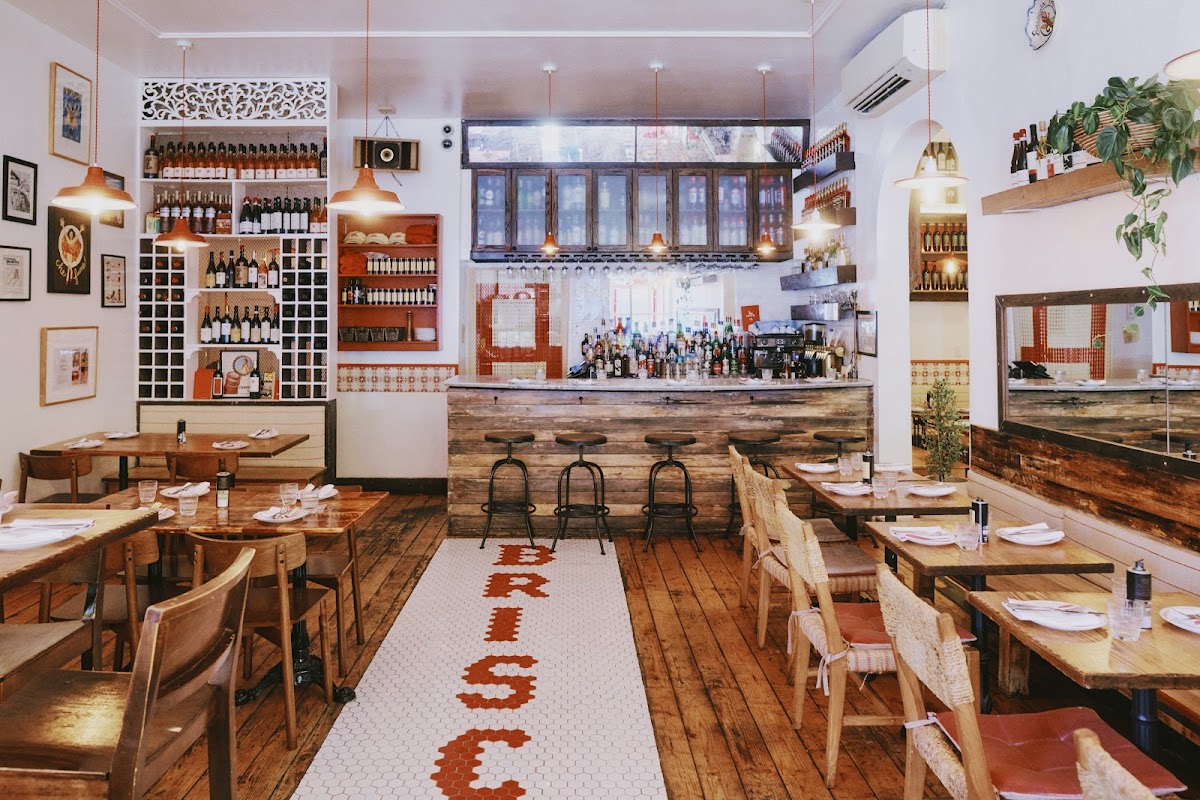
When Briscola Trattoria opened in Crown Heights last September, it arrived with the kind of anticipation that typically precedes disappointment. Chef Silvia Barban's northern Italian credentials are legitimate—the squid ink-stained spaghetti and paper-thin ravioli sing with the kind of restraint and technique that feels genuinely imported rather than performed. Yet the critical response has fractured along predictable lines: The Infatuation and Timeout celebrate an authentic gem, while other voices raise legitimate concerns about noise levels that can obliterate conversation and portion sizes that feel modest relative to the check.
The food itself resists easy dismissal. Barban's ravioli, barely thicker than parchment, yields to the gentlest pressure of a fork. Her tagliatelle al ragu achieves that velvety texture that announces hours of proper technique. The wagyu carpaccio and pistachio cake suggest a kitchen confident enough to avoid unnecessary flourishes. This is not food designed to impress with novelty; it's food that asks you to taste the difference between adequate and excellent.
But excellence, as currently executed at Briscola, demands a particular approach to dining. The restaurant works best as a disciplined two-course meal—one crudo or carpaccio to start, then a single pasta or main to close. Linger over a third course, and the ambient noise becomes oppressive. Order generously, expecting to subsidize someone else's experience, and the value proposition collapses. This specificity isn't necessarily a flaw, but it's a constraint worth acknowledging before you book.
What Briscola exposes is the widening gap between what critics celebrate and what diners actually want from a neighborhood trattoria. The Infatuation's assessment—that the Italian food here is "not just better than what you could have made at home—it's great"—is defensible and even generous. But great Italian cooking doesn't automatically translate to a great night out, especially in a room where conversation requires tactical advantage. The restaurant's opening moment has passed; what remains is the more honest reckoning about whether authentic northern Italian technique is enough to sustain a business model that asks Brooklyn prices for measured portions and an environment that actively discourages lingering.