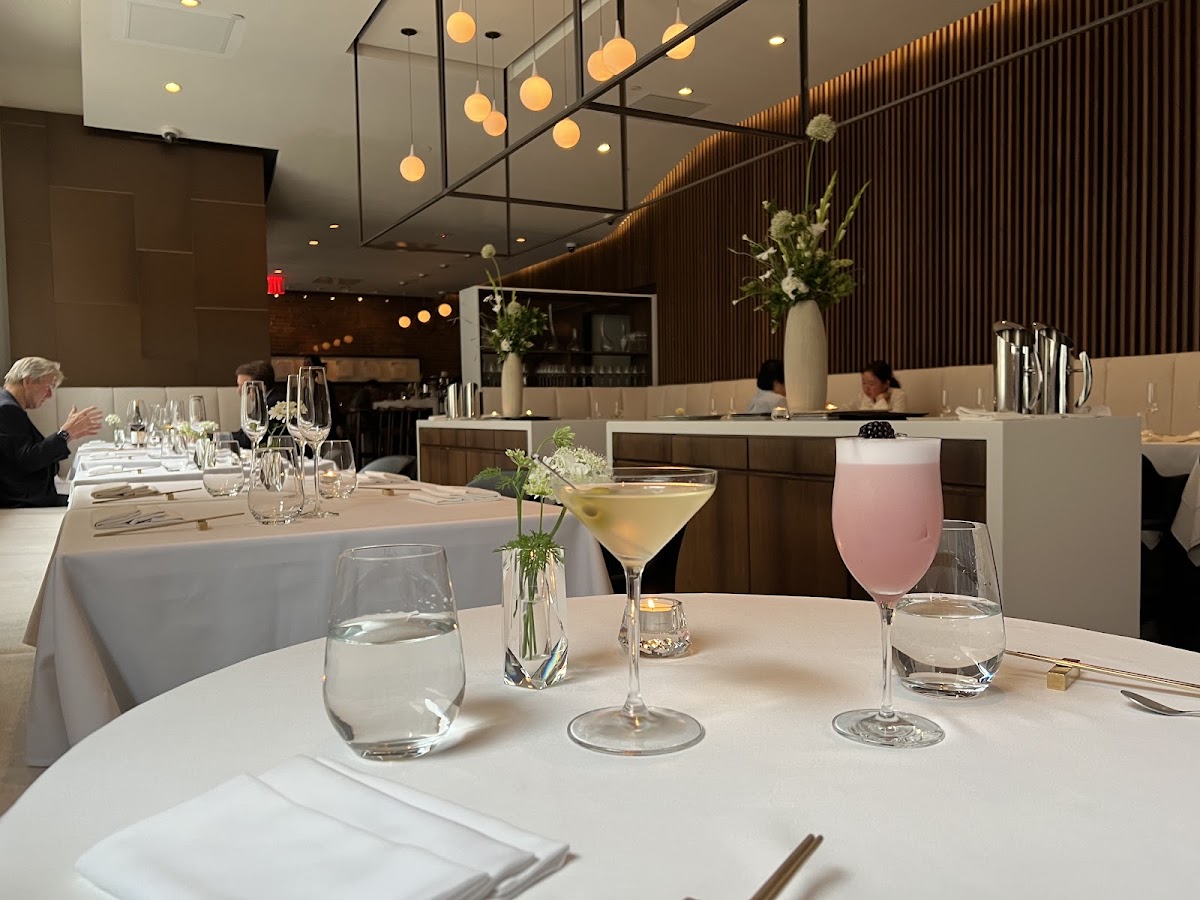
In 2024, Jungsik joined an extraordinarily exclusive club. With its three-Michelin-star rating, it became only the fifth restaurant in New York City to hold that distinction, and the first Korean restaurant ever to do so. It's a landmark moment for a cuisine that has spent over a decade reshaping New York's food landscape—and for a restaurant that has been central to that transformation since 2011. Chef Sung Anh Park has earned the culinary establishment's highest recognition. The question now is whether that recognition fully captures what Jungsik actually is.
The food, frankly, is flawless. A striped jack arrives with Oscietre caviar and white kimchi—restrained, intelligent, each element pulling its weight. The Wagyu tartare topped with truffles and Parmesan announces itself with confidence. The amberjack tartare with smoked trout roe shows technical mastery and restraint in equal measure. The galbi, that foundational Korean short rib, arrives as a reminder that tradition executed at this level becomes something else entirely. Across the tasting menu, there is no stumble, no moment where technique or ingredient selection wavers. The service is assured. The room hums with the efficiency of a restaurant operating at the highest professional standard. None of this is in dispute.
Yet there's a gap worth naming. A three-Michelin-star restaurant, in theory, offers more than technical perfection and reliable excellence. It promises an immersive experience—something that alters how you think about food, about flavor, about the possibilities of a meal. Some critics have argued that Jungsik, despite its undeniable mastery, reads as a very strong two-star operation rather than a definitive three-star one. It doesn't quite reach the next-level magic that separates the world's most transcendent dining experiences from merely excellent ones. The distinction may sound like splitting hairs to the uninitiated, but at this rarefied level, the difference between flawless execution and true transcendence is everything.
This isn't a knock on Jungsik's legitimacy or Park's achievements. The restaurant belongs in the conversation. It has elevated Korean cuisine's profile in New York irreversibly. But the Michelin ratings, for all their authority, sometimes reward consistency and technical mastery without accounting for whether a meal fundamentally changed you. Jungsik is thoroughly enjoyable, impressively crafted, and absolutely worth the pilgrimage. Whether it's truly in the same category as the world's most transformative restaurants remains, for some of us, an open question.
Meanwhile, the restaurant's ascension signals something real about New York's food scene. Korean restaurants are no longer the scrappy newcomers. They're the establishment. They've earned the stars, the reservations, the gravity. Jungsik deserves much of the credit for making that possible.