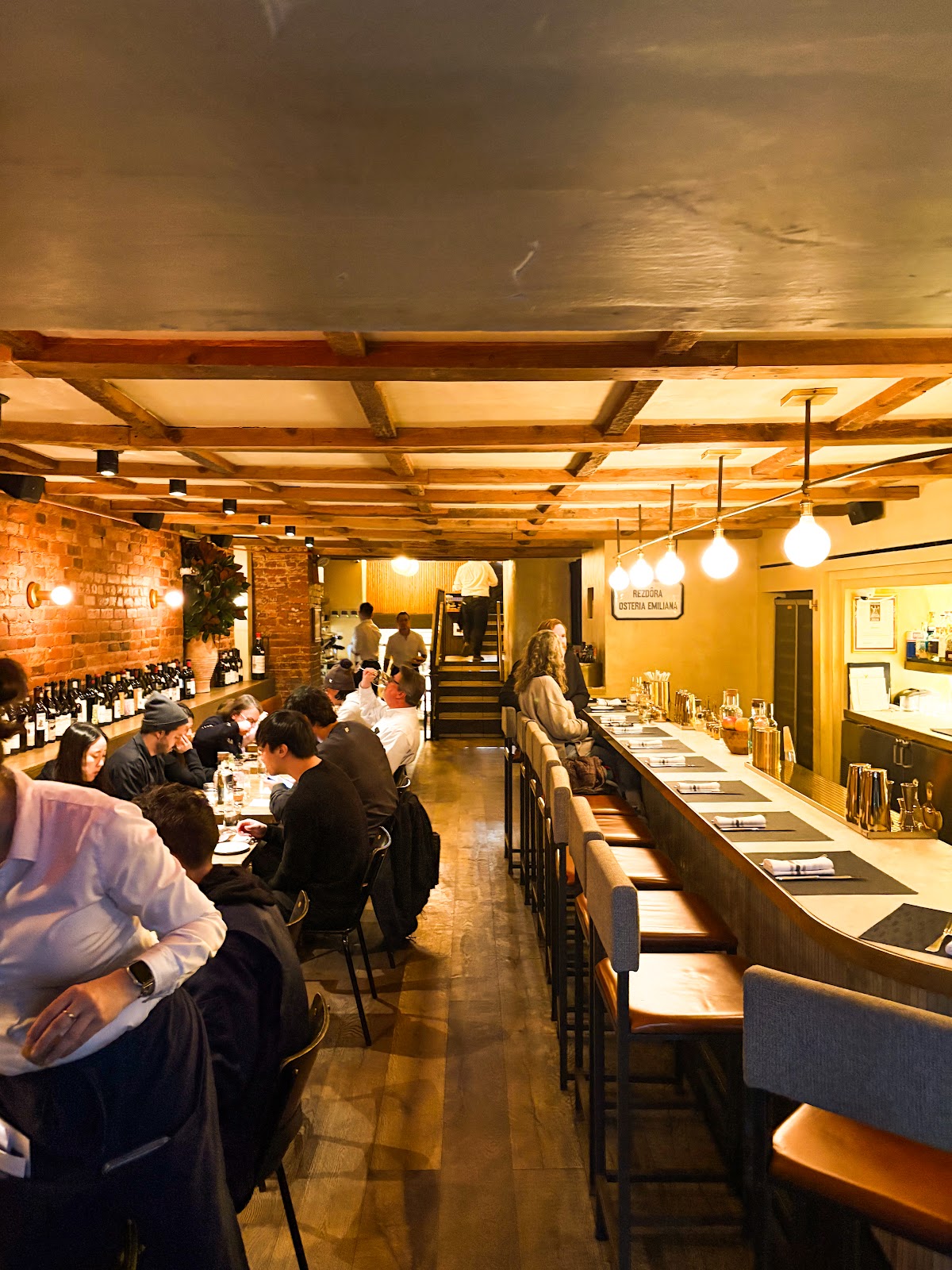
Rezdôra opened in 2019 to the kind of hype that New York reserves for restaurants promising to transport you somewhere else. Since then, the noise has only grown—a three-star review from Pete Wells, a Michelin star, and the inevitable backlash that follows when a place becomes hot enough to be called overrated. Walking through the door, you understand the appeal: the dining room hums with the energy of people who've made a pilgrimage, and for good reason. This is a restaurant built around a singular, uncompromising vision of Emilia-Romagna's pasta traditions.
That vision crystallizes in every handmade shape that arrives at your table. The cappelletti are militantly al dente, folded with the precision of someone who learned from their grandmother and refined that muscle memory through thousands of repetitions. The maccheroni al pettine arrives dressed in a duck ragù that tastes like it's been simmering since lunch service ended yesterday. An uovo raviolo threatens to collapse under the weight of its own richness—a single yolk that runs the moment your fork breaks through, mingling with ricotta and truffle. These are not dishes designed to please everyone. They demand a diner who understands that Italian regional cuisine exists on a spectrum of refinement that most American restaurants don't even acknowledge.
But here's where Rezdôra's ambition collides with reality. Once you venture beyond the pasta, the restaurant becomes aggressively uneven. The scallops arrive oversalted, salvaged only by the strength of the other flavors on the plate. The sirloin—a halved lump that should have been marbled enough to forgive slight cooking errors—sits there underdressed and overcooked, a main course that feels like an afterthought. If it weren't for the featherweight gnocco fritto, served with a cascade of cured meats that justify their own existence, you could almost accuse this place of being a one-trick pony.
Rezdôra matters because it's a mirror held up to New York's restaurant culture. Pete Wells loved it. Michelin gave it a star. These institutions saw a restaurant executing a specific cuisine at a near-obsessive level and rewarded it accordingly. Yet the room itself tells a different story—one of divided expectations and incompletely realized ambitions. The question isn't whether Rezdôra is good. The question is whether you're willing to order pasta for two courses and call it dinner, because that's where the magic lives. Everything else is just loud chatter.